

Vegan Baked Goods Recipes from Your Favourite Cafe
Diving into the world of vegan baked goods recipes is a lot less intimidating than it sounds. The real secret is getting a handle on a few core principles. Once you do, every treat you make will be moist, full of flavour, and perfectly structured—all without a drop of dairy or a single egg. Think of this guide as your starting block for building a vegan baking program you can be truly proud of.
Mastering the Fundamentals of Vegan Baking
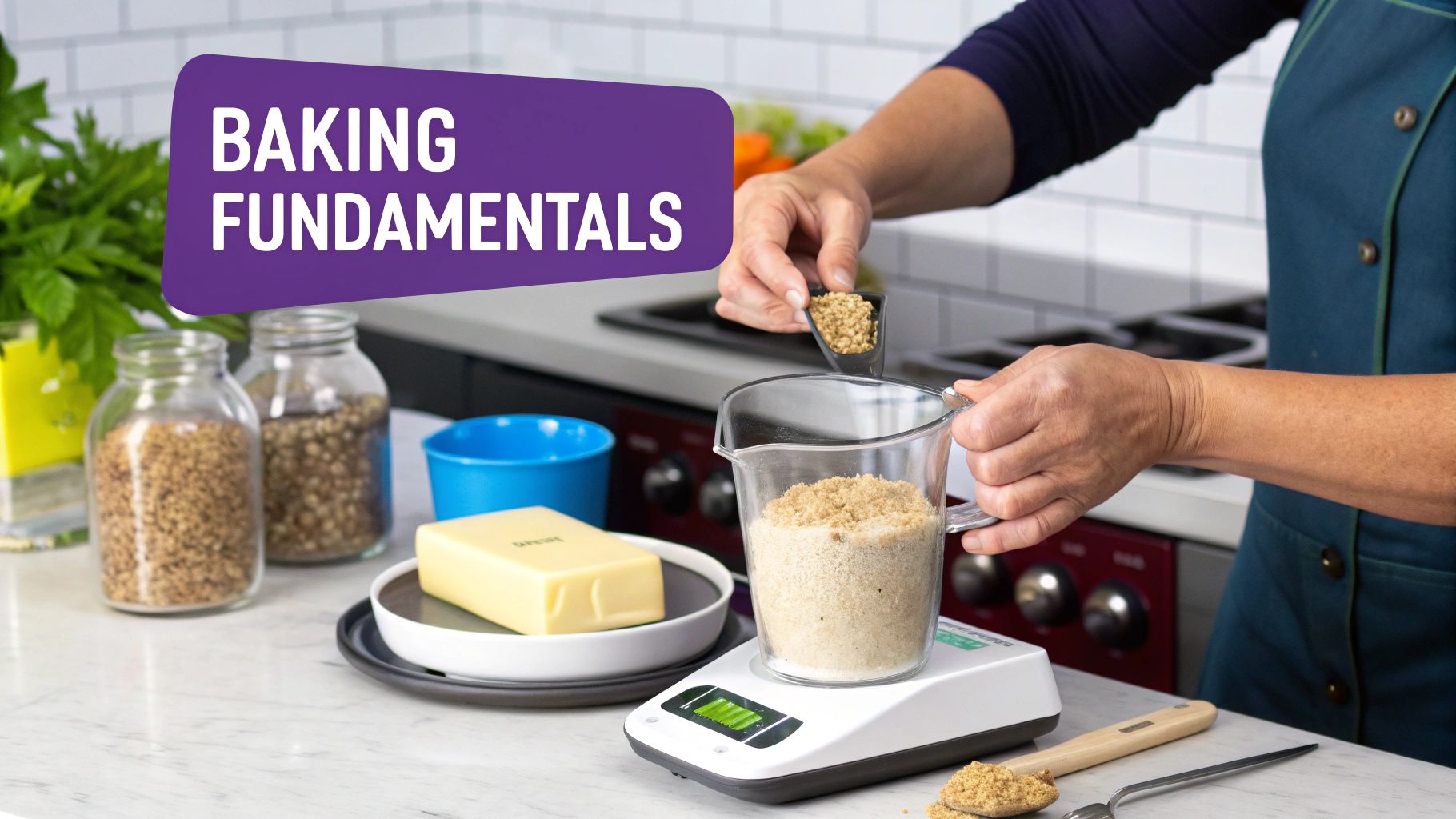
Stepping into vegan baking means shifting your perspective a bit. Instead of just swapping ingredients one-for-one, real success comes from understanding the job each one does. Eggs bind, leaven, and add moisture. Dairy brings fat, flavour, and tenderness. Our goal is to find plant-based alternatives that do the exact same work.
This isn't just about handing you a substitution list; it's about digging into the 'why.' For example, a flax egg (just ground flaxseed and water) creates a gel that’s a brilliant binder for hearty muffins and cookies. But for a light, airy cake, you'll get a much better lift from the chemical reaction of baking soda and vinegar.
This knowledge is more valuable than ever, thanks to the explosion of interest in plant-based eating. Demand for vegan baked goods recipes in Canada has skyrocketed, mirroring a trend across North America. In California, a state known for its forward-thinking food scene, sales of vegan bread and baked goods jumped by 5.8% in a single year. Digging deeper, categories like vegan muffins and pound cakes saw even bigger gains, climbing by 24.1% and 46.5% respectively. It’s clear people are hungry for these treats. You can find more insights on this growing demand over at SupermarketPerimeter.com.
Building Your Core Vegan Pantry
To bake consistently delicious vegan goods, you need a pantry you can rely on. And don't worry, we're not talking about exotic, hard-to-find ingredients. Just a few key staples will become the backbone of almost everything you create.
Here are the essentials you’ll be reaching for every day:
- Plant-Based Butters: Go for brands with a high fat content, around 80%. This is what mimics dairy butter best, giving you the right texture in pastries and cookies. Low-fat spreads just won't cut it—they often lead to a softer, less structured result.
- Non-Dairy Milks: Oat milk is a fantastic all-rounder. It has a creamy texture and neutral flavour that’s perfect for cakes and quick breads. Soy milk offers protein for added structure, while almond milk is lighter and works well when you don’t need that extra richness.
- Egg Replacers: Beyond flax or chia seeds, it's smart to keep unsweetened applesauce on hand for moisture in dense cakes. A good commercial powder replacer is also great for recipes that need a bit more structural integrity.
- Quality Flours and Sugars: These are mostly the same, but you’ll want to make sure your granulated sugar is certified vegan. Some white sugars are processed using bone char, which is a definite no-go.
A common mistake is treating all non-dairy milks as interchangeable. Their fat and protein content can vary wildly, which directly affects the crumb and moisture of your baked goods. Always think about the final texture you're aiming for when picking your milk.
The Science of Plant-Based Structure
Understanding how your ingredients work together is where the magic happens. In traditional baking, gluten and eggs form a network that traps air, making cakes rise. In vegan baking, we get there a different way. The reaction between an acid (like vinegar or lemon juice) and a base (baking soda) creates carbon dioxide, filling the batter with bubbles that provide lift. This is exactly why so many vegan cake recipes call for a splash of apple cider vinegar.
Fats also play a huge role. For flaky layers in scones and pie crusts, you need a fat that's solid at room temperature, like coconut oil or a stick-style vegan butter. On the other hand, liquid oils create a more tender, cake-like crumb, which makes them perfect for muffins and loaves. Once you get these foundational principles down, you'll have the creative freedom to bake just about anything with consistently delicious results.
Your Practical Guide to Vegan Substitutions
Great vegan baking isn't about what you take away; it's about the smart, delicious swaps you make. This section is your playbook for replacing common ingredients like eggs, dairy, and butter. We'll go beyond a simple list to explore how each choice shapes the final texture and flavour of your creations. Knowing these little details is the key to mastering your vegan baked goods recipes.
You'll quickly learn that a chia egg works wonders in a dense, hearty muffin, where its binding power is a huge plus. But try that in a light, airy vanilla cake, and you'll end up with a heavy crumb. For that, you're better off with a commercial egg replacer or a simple mix of baking soda and vinegar. It’s all about matching the right substitute to the job at hand.
Choosing the Right Non-Dairy Milk
Not all plant-based milks are created equal, and they perform very differently in recipes. The secret is in their fat, protein, and sugar content, which directly impacts everything from moisture to browning. In a café setting, consistency is everything, so let's get this right.
Here’s a quick rundown of the most common options and where they shine:
- Oat Milk: This is a fantastic all-rounder. Its naturally creamy texture and neutral flavour make it perfect for cakes, quick breads, and muffins. It brings a richness that comes surprisingly close to whole dairy milk.
- Soy Milk: With its higher protein content, soy milk gives baked goods excellent structure. This makes it a great choice for recipes that need a bit more stability, like vegan brioche or certain cake batters that could otherwise be flimsy.
- Almond Milk: Lighter in both texture and taste, almond milk is perfect when you don't want the milk to steal the show. Use it in recipes where you want other delicate flavours, like vanilla or citrus, to come through clearly.
A common headache is curdling, especially when you add acidic ingredients like lemon juice or coffee. Soy milk tends to be the most stable here, but a great pro-tip is to bring your plant milk to room temperature before mixing it in. This simple step can prevent most separation issues.
Before we dive deeper into eggs and fats, here is a quick-reference chart I keep taped inside my own pantry door. It’s a lifesaver when you’re in the middle of a recipe and need a fast, reliable swap.
Essential Vegan Baking Substitution Guide
This table breaks down the most common swaps you'll need for your café's vegan menu. Think of it as your cheat sheet for perfect texture and flavour every time.
| Original Ingredient | Vegan Substitute | Ratio (per unit of original) | Best For |
|---|---|---|---|
| 1 large egg (binding) | 1 tbsp ground flaxseed + 3 tbsp water | 1:1 replacement | Cookies, brownies, dense muffins |
| 1 large egg (moisture) | 1/4 cup applesauce or mashed banana | 1:1 replacement | Quick breads, spiced cakes |
| 1 large egg (leavening) | 1 tsp baking soda + 1 tbsp vinegar | 1:1 replacement | Light and airy cakes, cupcakes |
| 1 cup buttermilk | 1 cup plant milk + 1 tbsp lemon juice | 1:1 replacement | Scones, pancakes, tender cakes |
| 1 cup heavy cream | 1 can full-fat coconut milk (chilled) | Use solid cream only | Whipped toppings, rich mousses |
| 1/2 cup butter (creaming) | 1/2 cup stick vegan butter (80% fat) | 1:1 replacement | Cookies, cakes, frostings |
| 1/2 cup butter (flakiness) | 1/2 cup solid coconut oil or vegan shortening | 1:1 replacement | Pie crusts, biscuits, scones |
Having these ratios handy removes the guesswork, so you can focus on the creative side of baking. Now, let’s get into the specifics of why these work so well.
Mastering Egg Replacements
In traditional baking, eggs are the ultimate multitaskers—they bind, leaven, add moisture, and create richness. No single vegan substitute can do it all, so your best bet is to pick a replacement based on what the egg’s main job is in that specific recipe.
The biggest mistake we see bakers make is using the same egg replacer for everything. A flax egg that makes a cookie perfectly chewy will turn a vanilla cake into a dense, gummy brick. Always think about the end goal first.
For binding things like cookies, brownies, and dense loaves, ground flax or chia seeds are your best friends. Just mix one tablespoon of ground seeds with three tablespoons of water and let it sit for a few minutes. It’ll form a gel that holds everything together beautifully.
When it's moisture you're after in cakes and muffins, fruit purées are a fantastic choice.
- Applesauce: A quarter cup of unsweetened applesauce can replace one egg, adding moisture with just a hint of sweetness. It’s a natural fit for spice cakes and muffins.
- Mashed Banana: Just like applesauce, a quarter cup of mashed ripe banana brings great moisture and a distinct flavour—perfect for banana bread or hearty breakfast muffins.
- Dairy-Free Yogurt: This is my secret weapon. A quarter cup of plain, unsweetened vegan yogurt can replace an egg to add incredible moisture and a tender crumb, especially in cookies and cakes.
For recipes that need serious lift, like a fluffy sponge cake, you’ll want to rely on chemical leaveners. A simple combination of baking soda and an acid like apple cider vinegar creates a fizzy reaction that produces air bubbles, giving your bakes a light, airy texture that purées just can’t replicate.
Selecting the Perfect Vegan Fat
The type of fat you choose is one of the most critical decisions in vegan baking. It dictates everything from flakiness in a scone to tenderness in a muffin. And just like with milks, there's no single right answer.
For recipes that need that flaky, layered texture—think scones, biscuits, or pie crusts—you absolutely need a fat that stays solid at room temperature.
- Stick Vegan Butter: Look for high-quality vegan butters with a fat content around 80%. These are specifically designed to mimic dairy butter and are perfect for creaming with sugar or cutting into flour for laminated doughs.
- Solid Coconut Oil: When chilled, coconut oil gets incredibly firm, making it another excellent choice for creating those coveted flaky layers. Just be mindful of its low melting point and the subtle coconut flavour it can add.
For a tender, moist crumb like you’d find in muffins, quick breads, and many cakes, liquid fats are the way to go.
- Neutral Oils: Canola, grapeseed, or sunflower oil have almost no flavour, so they won't get in the way of your other ingredients. They are brilliant for creating a soft, even crumb.
- Melted Coconut Oil: While it’s solid when cold, melted coconut oil can be used as a liquid fat. It works well, but it will definitely leave a hint of coconut behind in the final product.
By thinking critically about the role each ingredient plays, you can make substitutions with confidence and produce consistently delicious results for all your vegan baked goods recipes.
Customer-Favourite Vegan Baked Goods Recipes
Ready to roll up your sleeves? Theory is great, but nothing beats having a few killer recipes you can count on. These five customer-favourites are built for the hustle of a real café—they’re reliable, easy to scale, and downright delicious every time. We're not just handing you an ingredient list; we're sharing the pro tips that make these bakes truly shine.
Think of these vegan baked goods recipes as the backbone of a stellar menu that’ll have folks lining up for more. From rich, fudgy brownies to a beautiful rustic tart, we've got you covered.
1. The Ultimate Fudgy Brownie
Forget everything you know about cakey, crumbly brownies. This recipe delivers a dense, intensely chocolatey experience that can go head-to-head with any traditional brownie. The secret? We use both cocoa powder for a deep, rich flavour and melted chocolate for that signature gooey, fudgy texture.
What You'll Need:
- 1 cup all-purpose flour
- 1 cup granulated vegan sugar
- ¾ cup unsweetened cocoa powder
- ½ teaspoon baking powder
- ½ teaspoon salt
- ½ cup neutral oil (canola or grapeseed work well)
- ½ cup plant-based milk (oat milk is fantastic here)
- 1 teaspoon vanilla extract
- 1 cup vegan chocolate chips, divided
The Method for Perfect Brownies: First things first, get your oven preheating to 175°C (350°F) and get an 8x8-inch baking pan greased and lined. In a large bowl, whisk together the flour, sugar, cocoa powder, baking powder, and salt. Don't skip this; it's key for breaking up clumps and getting an even mix.
Now, pour in the oil, plant milk, and vanilla. Grab a spatula and stir until it’s just combined—seriously, do not overmix. Overmixing is the number one enemy of a fudgy brownie because it develops too much gluten. Gently fold in half of your chocolate chips.
Pour the batter into your prepared pan, smooth out the top, and sprinkle the rest of the chocolate chips over the surface. Bake for 25-30 minutes. The trick is to pull them when they're slightly underbaked. A toothpick stuck in the centre should come out with moist crumbs attached, not totally clean.
Pro Tip: For those perfectly clean, sharp squares, let the brownies cool completely in the pan. Then, pop them in the fridge for at least an hour before you even think about slicing. This little bit of patience makes a world of difference in presentation.
2. Fluffy Lemon Blueberry Loaf
This vibrant, tender loaf is a year-round superstar. It strikes that perfect balance between zesty lemon and sweet bursts of blueberry, all wrapped up in a moist, fluffy crumb. It’s the ideal grab-and-go item for customers wanting something light but packed with flavour.
Key Ingredients:
- 2 cups all-purpose flour
- 1 cup granulated vegan sugar
- 2 teaspoons baking powder
- ½ teaspoon salt
- 1 cup unsweetened plant-based milk
- ⅓ cup neutral oil
- Zest and juice of 2 large lemons
- 1 teaspoon vanilla extract
- 1 ½ cups fresh or frozen blueberries
Lemon Glaze (Don't Skip It!):
- 1 cup icing sugar
- 2-3 tablespoons lemon juice
Putting the Loaf Together: Start by preheating your oven to 180°C (350°F) and lining a loaf pan. In one bowl, whisk your dry ingredients: flour, sugar, baking powder, and salt. In a separate bowl, mix together the plant milk, oil, lemon zest, lemon juice, and vanilla.
Pour the wet into the dry and mix until just combined—again, don't overwork the batter. Now for a crucial little trick: toss the blueberries with a tablespoon of flour in a small bowl. This stops them from sinking to the bottom of the loaf.
Gently fold the floured blueberries into the batter. Pour it into your pan and bake for 50-60 minutes, or until a skewer comes out clean. Let it cool in the pan for about 15 minutes before moving it to a wire rack to cool completely.
Once it's cool, whisk the icing sugar and lemon juice together for the glaze. Drizzle it over the top and let it set before slicing.
Figuring out the right vegan substitutes can be a bit of a puzzle. This visual guide makes it easy to see which options work best depending on whether you're making a fluffy cake, a dense muffin, or a crumbly scone.
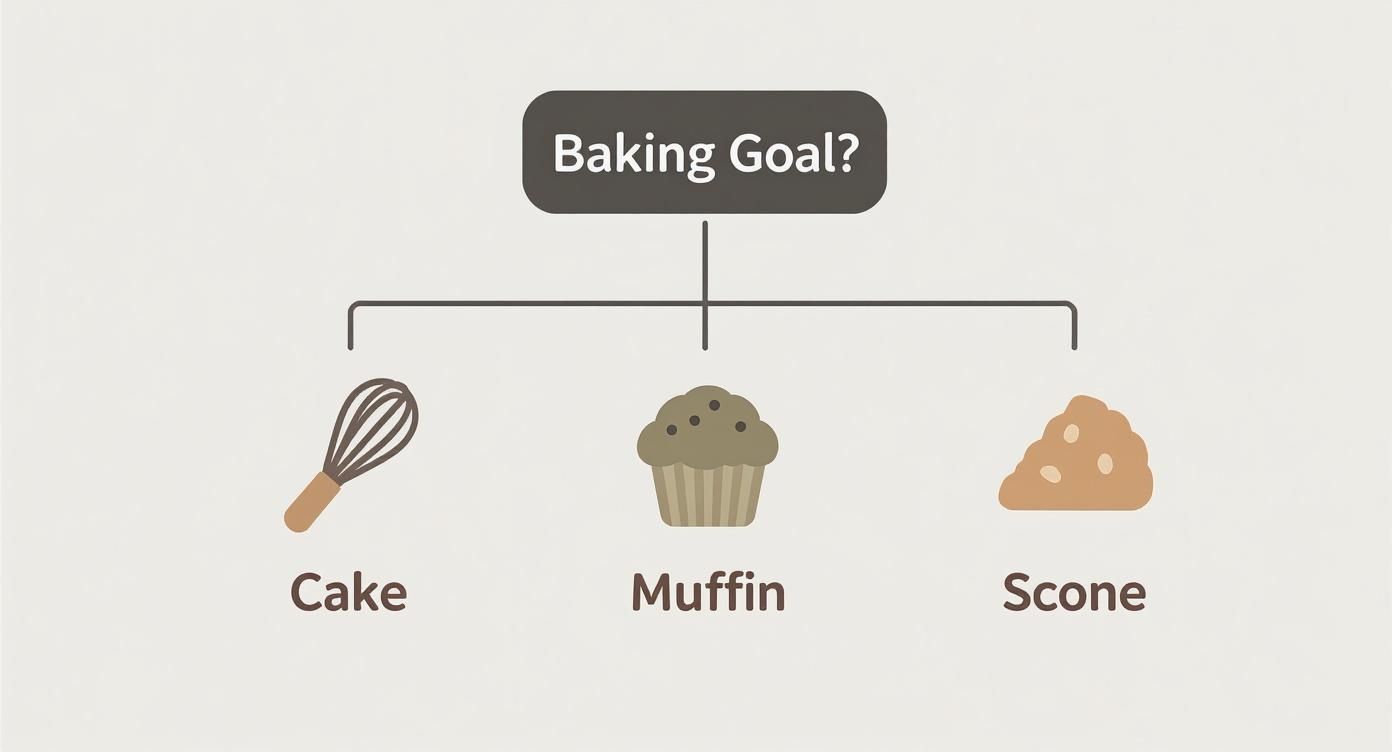
As the diagram shows, the final texture you're aiming for—light and airy versus rich and dense—should guide your choice of egg replacer and fat.
3. Classic Maple Pecan Scones
These scones are the real deal, striking that perfect balance between a tender, crumbly inside and a lightly crisp outside. The warm, nutty flavour from toasted pecans paired with sweet maple syrup makes them an absolute dream with a morning coffee. Many successful cafes offer a great selection of vegan items, just like the variety of pastries available online from local spots.
For the Scones:
- 2 ½ cups all-purpose flour
- ¼ cup brown sugar
- 1 tablespoon baking powder
- ½ teaspoon salt
- ½ cup cold, solid vegan butter, cubed
- ½ cup chopped pecans, lightly toasted
- ⅓ cup pure maple syrup
- ⅓ cup plant-based milk
For the Maple Glaze:
- ½ cup icing sugar
- 2 tablespoons maple syrup
How to Make Them: Get your oven preheated to 200°C (400°F). In a large bowl, whisk together the flour, brown sugar, baking powder, and salt. Add the cold, cubed vegan butter. Using your fingertips or a pastry cutter, work the butter into the flour until it looks like coarse crumbs with some pea-sized butter bits still visible.
Stir in the toasted pecans. In a separate small bowl, mix the maple syrup and plant milk. Pour this into the flour mixture and stir gently until a soft, shaggy dough comes together.
Tip the dough out onto a lightly floured surface and knead it just 2-3 times to bring it together—no more! Pat it into a circle about 1-inch thick and cut it into 8 wedges. Place them on a lined baking sheet, brush the tops with a little extra plant milk, and bake for 12-15 minutes until golden.
Let the scones cool a bit before you drizzle them with that lovely maple glaze.
4. Hearty Morning Glory Muffins
This is the ultimate "everything but the kitchen sink" muffin, and I mean that in the best way possible. They’re packed with wholesome goodies like carrots, apples, raisins, and walnuts. They are incredibly moist, satisfying, and a fantastic choice for customers looking for a more nutritious breakfast.
Muffin Must-Haves:
- 2 cups whole wheat flour
- 1 cup packed brown sugar
- 2 teaspoons baking soda
- 2 teaspoons ground cinnamon
- ½ teaspoon salt
- 1 ½ cups grated carrots
- 1 cup grated apple
- ½ cup raisins
- ½ cup chopped walnuts
- ¾ cup unsweetened applesauce
- ½ cup neutral oil
- 2 flax eggs (2 tbsp ground flaxseed + 6 tbsp water)
The Muffin Method: Preheat the oven to 180°C (350°F) and line a 12-cup muffin tin. In a big bowl, whisk together the flour, brown sugar, baking soda, cinnamon, and salt. Then, stir in the grated carrots, apple, raisins, and walnuts until everything is well-coated.
In another bowl, whisk the applesauce, oil, and your prepared flax eggs. Pour this wet mix into the dry ingredients and stir until just moistened.
Divide the batter evenly among the muffin cups, filling each about three-quarters full. Bake for 20-25 minutes, or until a toothpick poked into the centre comes out clean. Let them cool in the pan for a few minutes before moving them to a wire rack.
5. Rustic Apple Cinnamon Galette
A galette gives you all the deliciousness of a pie with about half the effort, which makes it a secret weapon for a busy café. Its free-form, rustic look is all part of the charm. This one features a flaky, buttery crust filled with sweetly spiced apples.
For the Pastry:
- 1 ½ cups all-purpose flour
- 2 tablespoons sugar
- ½ teaspoon salt
- ½ cup cold, solid vegan butter, cubed
- 4-6 tablespoons ice-cold water
For the Filling:
- 3 medium apples, thinly sliced
- ¼ cup brown sugar
- 1 tablespoon cornstarch
- 1 teaspoon ground cinnamon
- Pinch of nutmeg
- 1 tablespoon lemon juice
Putting It All Together: First, make the pastry. Pulse the flour, sugar, and salt in a food processor. Add the cold butter and pulse until it looks like coarse meal. Drizzle in the ice water, one tablespoon at a time, pulsing until the dough just starts to come together. Form it into a disc, wrap it up, and chill it for at least 30 minutes.
Preheat your oven to 200°C (400°F). On a floured surface, roll the chilled dough into a 12-inch circle and carefully transfer it to a lined baking sheet.
In a bowl, toss the sliced apples with the brown sugar, cornstarch, cinnamon, nutmeg, and lemon juice. Arrange the apple slices in the centre of the dough, leaving a 2-inch border all around. Gently fold the edges of the dough up and over the filling, pleating it as you go.
Brush the crust with a little plant milk and sprinkle with some extra sugar if you like. Bake for 35-40 minutes, until the crust is golden brown and the filling is bubbly and delicious. This galette is amazing served warm, either on its own or with a scoop of vegan vanilla ice cream.
How to Troubleshoot Common Vegan Baking Issues
Even when you follow a great vegan recipe to the letter, some days the kitchen just has other plans. We’ve all been there: a tray of cookies that melts into one giant, sad pancake, or a beautiful loaf that cuts open to reveal a gummy, dense centre. It’s frustrating, especially in a busy café where every batch counts.
But don’t toss that tray just yet. Almost every vegan baking mishap has a clear cause and a straightforward fix. Think of this as your field guide for figuring out what went wrong and, more importantly, how to get it right next time.
Solving Spreading and Sinking Bakes
Flat, sprawling cookies are probably the most common complaint I hear. The number one culprit is almost always the temperature of your fat. If your vegan butter or coconut oil is too soft when it hits the mixer, your cookies are destined to spread before their structure can set in the oven.
The type of fat you use also plays a big role. Some vegan butters have a higher water content, which encourages spreading. I always recommend a high-quality, block-style vegan butter with a fat content around 80%—it just performs better.
Here’s how to fight the spread:
- Chill your dough. This is a non-negotiable step for me. A minimum of 30 minutes in the fridge solidifies the fat and makes a world of difference.
- Get an oven thermometer. An oven that runs cool gives the fat too much time to melt before the cookie sets. A cheap thermometer can save you a lot of headaches.
- Go easy on the grease. A heavily greased baking sheet is like a slip-n-slide for your cookie dough. A sheet of parchment paper is all you need.
For cakes or muffins that sink in the middle, the problem is usually a lack of structure or a leavening failure. The most frequent cause? Opening the oven door too early, which creates a sudden temperature drop and makes your bake collapse. It could also be underbaking or using expired baking powder.
Sinking can also be a tell-tale sign of over-mixing. When you work the batter too much after adding flour, you build up too much gluten. The structure rises fast and hard in the oven, then collapses on itself, leaving you with that dreaded sunken centre.
Eliminating Gummy and Dense Textures
Nothing is more disappointing than a gummy, heavy texture in a cake or quick bread. This issue almost always comes down to one thing: over-mixing. The second your wet and dry ingredients are introduced, gluten starts to develop. Since we don't have eggs to create that tenderizing effect, controlling gluten is absolutely critical in vegan baking.
The fix is beautifully simple: stop mixing when you can still see a few streaks of flour. That's it. This gentle touch guarantees a light, tender crumb instead of a tough, rubbery texture.
A few other things could be making your bakes dense:
- The wrong egg replacer. Using a heavy binder like a flax egg in a light, airy sponge cake will just weigh it down. Those recipes need something that provides lift, like the reaction between baking soda and vinegar.
- How you measure your flour. If you scoop flour directly out of the bag with your measuring cup, you can accidentally pack in up to 25% extra. Always spoon the flour into the cup and level it off.
- Too much liquid. Adding something like applesauce to a recipe that's already very moist can throw the whole balance off, leading to a heavy, waterlogged result.
Once you learn to spot these common problems, you can adjust your technique on the fly. You'll not only save batches from going to waste but also build the confidence to tackle any vegan baked goods recipe that comes your way.
Pairing and Presenting Your Vegan Goods
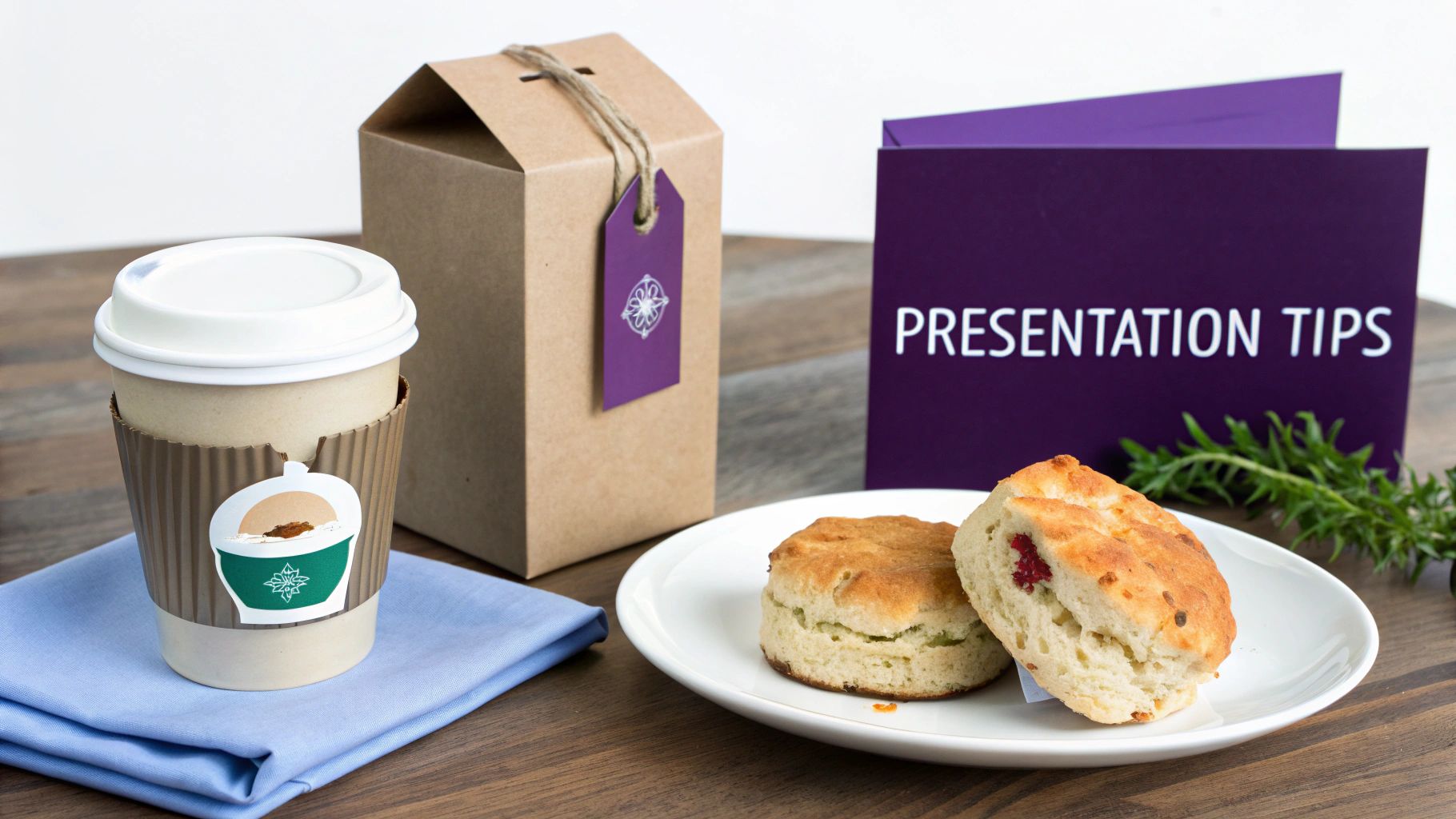
Creating incredible vegan baked goods is a fantastic start, but it's only half the battle. The other half—the part that turns a delicious treat into a memorable experience—is all about how you present it. This is where smart pairing, thoughtful storage, and beautiful packaging come together to make your offerings shine.
A well-chosen pairing can elevate a simple muffin or scone into a curated moment for your customer. It’s a chance to guide their experience and show off the quality of everything you offer, not just the baked goods. The goal is simple: create combinations where the drink and the treat make each other taste even better.
Crafting Perfect Beverage Pairings
Matching flavours is an art, but it starts with a few basic principles. You can either complement the dominant notes in your baked goods or create a delightful contrast. For instance, the deep, earthy notes of a chocolate avocado mousse tart are incredible with a dark roast coffee. On the other hand, a zesty lemon loaf is perfectly cut by a crisp, bright light roast.
To get your ideas flowing, think about these classic combinations:
- Maple Pecan Scones with a Flat White: The creamy, mellow flavour of oat milk in a flat white is the perfect partner for the nutty sweetness of the scone. It complements without overpowering.
- Fudgy Brownies with a Black Americano: The intense, slightly bitter notes of a straight espresso shot slice right through the richness of a fudgy brownie, cleansing the palate for the next bite.
- Lemon Blueberry Loaf with an Earl Grey Tea: The citrusy bergamot in the tea beautifully mirrors the lemon in the loaf, creating a pairing that's harmonious and incredibly refreshing. You can explore our full range of ethically sourced teas to find the perfect match for all your creations.
The secret to a great pairing is being intentional. Don't just sell a muffin and a coffee; sell an experience. A small suggestion like, "This latte really brings out the cinnamon in our morning glory muffins," makes a customer feel seen and understood.
Vegan Baked Good & Coffee Pairing Suggestions
Suggesting the right coffee pairing can transform a customer's experience and highlight the unique flavours in your vegan treats. Here’s a quick-reference table to help your team make perfect recommendations every time.
| Vegan Baked Good | Tasting Notes | Recommended Coffee Pairing | Why It Works |
|---|---|---|---|
| Chocolate Chip Cookie | Sweet, buttery, rich chocolate | Medium Roast Drip Coffee | A balanced, classic coffee won't overpower the cookie, letting the chocolate notes shine through. |
| Blueberry Muffin | Fruity, sweet, slightly tart | Light Roast, Single-Origin (e.g., Ethiopian) | The bright, floral, and citrus notes in a light roast complement the berries without adding bitterness. |
| Cinnamon Roll | Warm spice, sweet, yeasty | Dark Roast Latte | The robust, slightly smoky notes of a dark roast cut through the sweetness, while the steamed milk adds a creamy balance. |
| Lemon Poppy Seed Scone | Zesty, bright, nutty | Cold Brew | The low acidity and smooth, chocolatey profile of cold brew provide a beautiful contrast to the scone's bright citrus flavour. |
Using these suggestions as a starting point can help you build a reputation for thoughtful, curated experiences that keep customers coming back.
Smart Storage and Eye-Catching Packaging
Freshness is everything. To make sure your vegan baked goods recipes taste just as amazing at 3 p.m. as they did at 7 a.m., proper storage is non-negotiable. Most of your muffins, scones, and quick breads will be happy in an airtight container at room temperature for up to two days. Anything with a delicate frosting or filling, however, needs to be refrigerated.
Your packaging is your final handshake with the customer and a powerful branding tool. I always recommend opting for eco-friendly materials like recycled paper boxes or compostable bags. This choice resonates deeply with the plant-based community and reinforces a commitment to sustainability. Even a simple branded sticker or a hand-tied ribbon can make a standard takeout order feel like a special gift.
This focus on presentation is more important than ever as business shifts online. A 2023 analysis found that online retail now accounts for 46.2% of the vegan pastry market in California, all driven by the convenience of delivery. With plant-based dessert subscription services seeing a 40% jump in subscribers since 2020, standout packaging is absolutely essential for making a great first impression. You can read more about the booming vegan pastry market to see where the trends are headed.
By mastering these final details, you’re not just baking—you’re building a successful business.
Your Questions About Vegan Café Baking, Answered
Adding vegan baking to your café menu is exciting, but it naturally comes with a few questions. How do you price everything? Do these treats last as long on the shelf? Let's dive into the common queries we hear from café owners and bakers just like you.
How Should I Price My Vegan Baked Goods?
Pricing can feel like a big hurdle, but it's simpler than you might think. Yes, some specialty ingredients like a good block-style vegan butter or certain nut milks can cost a bit more. On the other hand, things like flaxseed or applesauce are often much cheaper than eggs.
The best approach is to cost out your vegan baked goods recipes exactly as you would any other item on your menu. Calculate your cost per unit, factoring in every ingredient, your time, and overhead. You’ll often find the final number is surprisingly close to your non-vegan goods. There’s no need to slap a "vegan tax" on everything; just price them competitively based on their real cost and the value they bring. Your marketing should focus on amazing flavour and quality, not just the "vegan" label.
Do Vegan Baked Goods Have a Shorter Shelf Life?
That's a common myth, but in my experience, the opposite is usually true. Many vegan baked goods actually have a fantastic, if not better, shelf life. Without dairy and eggs, which spoil quickly, they tend to be more stable.
Think about a classic coffee cake. A vegan version made with oil instead of butter will stay moist and tender for days longer. The absence of eggs also lowers concerns about bacterial growth. For most of your muffins, cookies, and quick breads, you can easily expect a shelf life of 2-4 days in an airtight container at room temperature.
My secret weapon? A little bit of dairy-free yogurt or applesauce. They’re brilliant egg replacers, and their natural moisture helps keep baked goods from drying out, stretching their freshness even further.
Can I Make My Existing Recipes Vegan?
Absolutely! In fact, this is the best place to start. Adapting a crowd-favourite recipe is far less intimidating than creating something new from scratch. I always recommend starting with simpler items like cookies, brownies, or muffins, where substitutions are more direct.
Let’s say you want to convert your famous chocolate chip cookie recipe:
- Swap the dairy butter for a high-quality, block-style vegan butter. Use a 1:1 ratio.
- Replace each egg with a flax egg (just mix 1 tbsp ground flax with 3 tbsp water and let it sit for a few minutes).
- Double-check that your chocolate chips are dairy-free.
Nail one recipe, get comfortable with the process, and then move on to the next. For some ideas on building out a balanced selection, you can see how our menu features a mix of satisfying options for everyone. This gradual approach helps you learn as you go without feeling overwhelmed.
How Do I Prevent Cross-Contamination?
This is a big one, especially for customers with serious dairy or egg allergies. While you might not be able to promise a 100% allergen-free space without a separate kitchen, you can put strict protocols in place to minimize risk.
Invest in separate, colour-coded utensils, mixing bowls, and baking sheets just for your vegan production. Always, always prepare and bake your vegan items first thing in the morning, before any non-vegan baking starts. Most importantly, be transparent. Clear communication with your customers about your kitchen practices lets them make an informed choice and builds trust.
At East End Annie's, we believe great food brings people together. Explore our full range of homestyle baked goods, hearty sandwiches, and locally roasted coffee at https://eastendannies.ca.