

The Ultimate Guide to Single Origin Coffee
So, what exactly is single origin coffee? Put simply, it’s coffee made from beans that all come from one specific place—a single farm, a particular producer, or a distinct region. This focus captures the unique taste of that one location, giving you a pure and unblended flavour experience. Think of it as the coffee world's equivalent of a solo artist's album, showcasing one clear, distinct vision.
Unlocking the Story in Your Cup
Think of single origin coffee not just as a drink, but as a taste of a specific place on Earth. It’s a lot like how a fine wine reflects its terroir—a term that describes how a region’s unique environment, from its climate and soil to its altitude, shapes the final product. Just as a Sauvignon Blanc from France tastes completely different from one grown in California, a coffee from Ethiopia will have a flavour profile worlds apart from one grown in Colombia.
That's the real magic of single origin coffee. It offers a pure, unfiltered snapshot of its home. A bag of these beans tells a story of a single farm, a specific harvest, and the dedicated people who grew it. This traceability is a cornerstone of the entire specialty coffee movement.
From a Vague Idea to a Global Standard
This idea isn't new, but its popularity has exploded recently. For a long time, most coffee was sold in blends to create a consistent, reliable taste all year round. Blends are like a talented band playing in harmony to create a balanced sound. Single origins, on the other hand, are the solo performers, celebrated for their unique and sometimes wonderfully unpredictable notes.
The shift toward single origin coffee comes from a growing desire for connection and transparency. Coffee lovers want to know more than just what’s in their cup; they want to know where it came from and who grew it. This focus allows us to appreciate the subtle differences that make each coffee-growing region special. For example, you might discover you love the bright, tea-like floral notes of an Ethiopian Yirgacheffe or the deep, chocolatey richness of a classic Guatemalan bean.
By choosing a single origin coffee, you're not just picking a flavour; you're exploring the geography of taste. It’s an invitation to connect with a specific corner of the world, one delicious sip at a time.
Why Does This Matter for Your Morning Brew?
Understanding single origin coffee empowers you to make smarter choices about your daily brew. Instead of just grabbing a generic bag, you can start to identify the characteristics you enjoy most and seek them out. This knowledge transforms buying coffee from a routine chore into an exciting exploration.
The best way to figure out what you truly love is to start exploring these unique profiles. You can begin your journey by browsing a curated selection of single origin coffee beans and seeing for yourself how different regions and roast profiles can completely change your coffee experience. Each bag offers a new adventure and a direct line from the farmer's hard work to the rich aroma filling your kitchen. This is the first step toward appreciating the incredible diversity the coffee world has to offer.
A Flavour Tour of Famous Coffee Regions
Every bag of single origin coffee is like a passport, offering a direct taste of its unique homeland. The world's coffee grows in a band around the equator known as the "Bean Belt," and the diverse landscapes within it create remarkably different flavour profiles. Learning about these regions is like learning the language of coffee—it turns a name on a label into a clear expectation for the delicious brew waiting inside.
This map breaks down the core idea of single origin coffee, showing how the origin, its distinct flavour, and the story behind it are all woven together.
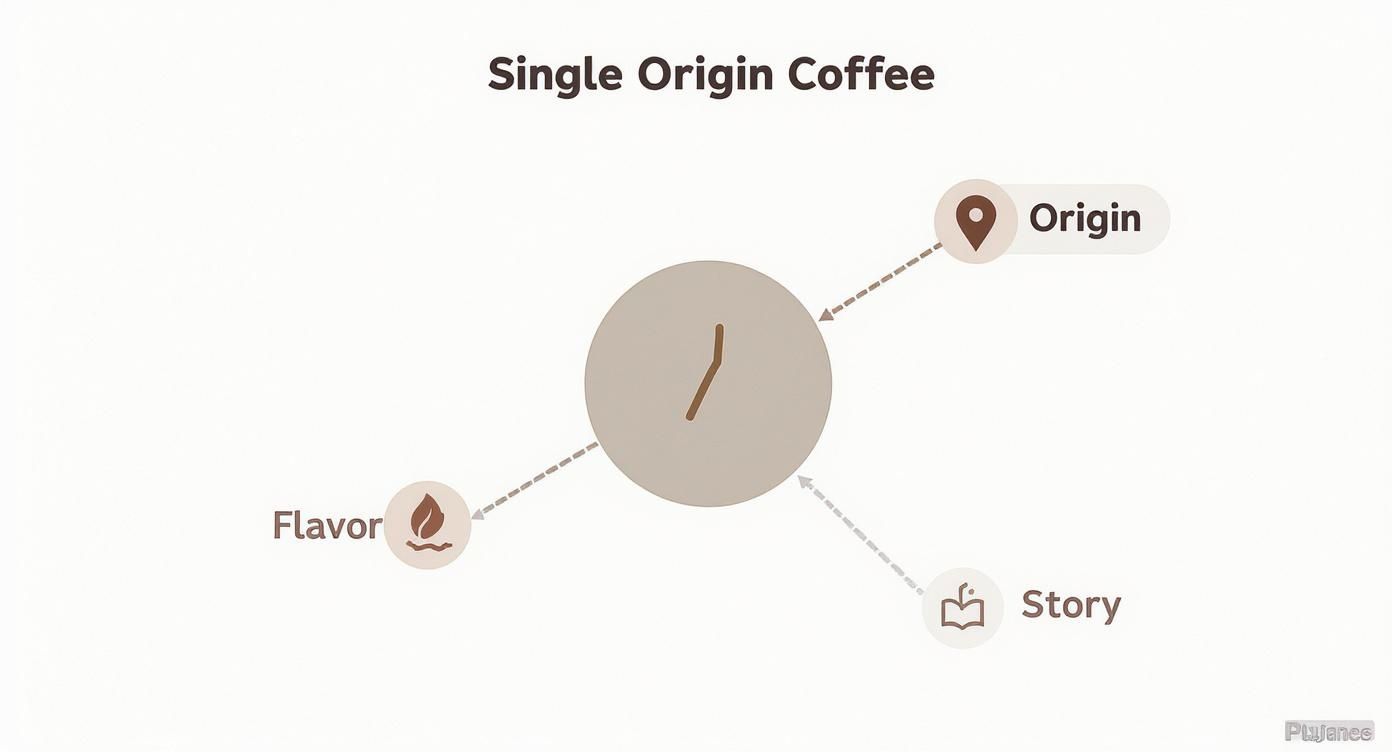
As you can see, every bean carries the identity of its specific home, which directly shapes its unique flavour and the human story behind its journey to your cup.
African Coffees: The Birthplace of Brightness
Africa, and Ethiopia specifically, is widely considered the birthplace of coffee. Coffees from this continent are celebrated for their vibrant acidity and complex floral and fruity notes. Think lively, bright, and wonderfully aromatic.
Ethiopian beans are legendary for a reason. Depending on the specific area, they can taste like a bouquet of flowers with hints of jasmine and bergamot, or they can burst with the juicy flavours of blueberry and strawberry. Not to be outdone, Kenyan coffees are prized for their sharp, wine-like acidity and distinct notes of blackcurrant and citrus.
If you enjoy a cup that feels light, almost tea-like, and excitingly complex, exploring African single origin coffee is a fantastic place to start.
When you taste an African coffee, you're tasting history. The genetic diversity of coffee plants in Ethiopia alone is staggering, leading to a vast spectrum of flavours that simply can't be found anywhere else on Earth.
Latin American Coffees: Comfort in a Cup
Latin America is a powerhouse in the coffee world, producing beans known for their balance, sweetness, and easy-drinking nature. These are the coffees that often taste like what we classically think of as "coffee"—smooth, satisfying, and comforting. They typically feature notes of chocolate, nuts, and caramel.
Colombia is a titan in this region, famous for its well-rounded beans that offer a gentle sweetness and a pleasant, nutty finish. This makes Colombian single origin coffee an excellent daily drinker. Moving north, Guatemalan coffees often present a richer, more full-bodied experience with prominent notes of dark chocolate and spice.
Other highlights from the region include:
- Costa Rican Coffee: Known for its clean, bright profile with crisp acidity and notes of tropical fruit.
- Brazilian Coffee: Celebrated for its low acidity, heavy body, and classic nutty and chocolatey flavours, making it a perfect base for espresso.
- Honduran Coffee: Often offers a delightful sweetness with caramel and stone fruit undertones.
For those who prefer a smooth, rich, and dependably delicious brew, the diverse offerings from Latin America are sure to hit the spot.
Asian Coffees: Bold and Earthy Flavours
Coffees from Asia, particularly from Indonesia, are known for their deep, earthy, and full-bodied characteristics. They stand in stark contrast to the bright acidity of African beans, offering a completely different but equally compelling experience. The flavour profile here is often described as herbal, spicy, and profoundly rich.
Sumatran coffee is perhaps the most famous from this region, recognized for its heavy body, low acidity, and distinct notes of dark chocolate, cedar, and even tobacco. This unique profile is partly due to a traditional processing method called "wet-hulling," which imparts that signature earthy taste.
Other notable origins like Papua New Guinea can offer a more balanced cup, combining earthy undertones with fruity and spicy notes. If you're drawn to bold, intense flavours that linger on the palate, an Asian single origin will provide a truly memorable tasting adventure.
To make it even easier to navigate these flavours, here’s a quick-reference guide to what you can generally expect from each major coffee-growing region.
Common Flavour Profiles by Coffee Origin
| Region | Common Tasting Notes | Acidity | Body |
|---|---|---|---|
| Africa | Floral (jasmine), Fruity (blueberry, citrus, bergamot), Wine-like | High, Bright | Light to Medium |
| Latin America | Chocolate, Nuts, Caramel, Brown Sugar, Mild Fruit | Medium, Balanced | Medium to Full |
| Asia / Indonesia | Earthy, Spicy, Herbal, Dark Chocolate, Cedar, Tobacco | Low | Heavy, Full |
By understanding these general regional characteristics, you can read any coffee label with confidence, knowing exactly what kind of journey you're about to pour into your cup.
How Processing Methods Shape Your Coffee's Taste
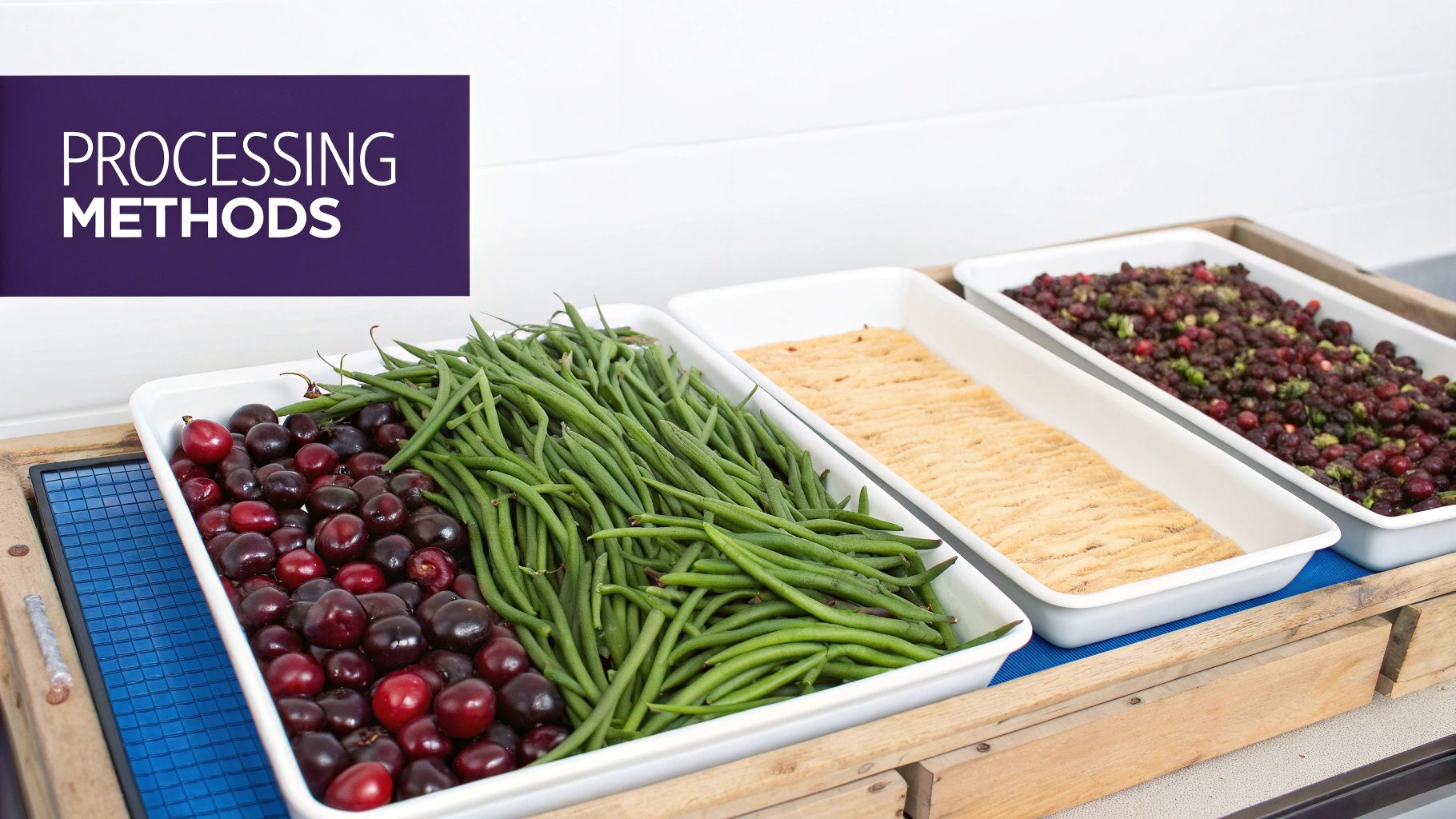
The journey of a single origin coffee bean from a lush farm to your morning cup involves a crucial, transformative step that most of us never see. It’s called processing, and it’s the bridge between the harvested coffee cherry and the green bean ready for roasting.
Think of it as the secret technique a chef uses to define a dish before it even hits the pan. How a farmer chooses to process their coffee cherries dramatically alters the final flavour, acidity, and body of the brew. It’s a craft that requires immense skill and precision, directly influencing whether your coffee tastes bright and clean or sweet and fruity.
The three primary methods you'll encounter are washed, natural, and honey processing. Each one manipulates the relationship between the coffee bean and the fruity pulp of the cherry it grows in, creating distinctly different results.
The Washed Process: Clean and Crisp Flavours
The washed process is all about purity and clarity. In this method, the fruit pulp (or mucilage) is completely washed off the coffee bean before it's dried. Imagine peeling an apple before you eat it to taste only the fruit itself, without the skin's influence. That's exactly what washed processing does for a coffee bean.
This technique allows the bean's inherent characteristics—shaped by its varietal, soil, and altitude—to shine through without any added fruitiness from the cherry. The result is a coffee with a clean taste, bright, sparkling acidity, and a lighter body. It’s the go-to method for producers who want to highlight the pure terroir of their single origin coffee.
You can often expect tasting notes like these from washed coffees:
- Crisp citrus like lemon or grapefruit
- Delicate floral aromas such as jasmine or bergamot
- A clean and bright finish that doesn't linger heavily
This process is highly controlled and requires significant amounts of fresh water, but it produces a consistent and refined cup that many coffee purists adore.
The Natural Process: Sweet and Fruity Notes
If washed processing is about purity, the natural process is about rich, deep flavour infusion. Here, the entire coffee cherry is left intact and dried with the bean still inside, much like drying a grape to make a raisin. The bean slowly absorbs the sugars and fruity compounds from the surrounding pulp over several weeks.
This method is the oldest and most traditional way to process coffee. It's like slow-cooking, allowing the bean to soak up all the delicious flavours of the fruit it grew in. The result is a coffee with a heavy body, a syrupy sweetness, and bold, complex fruit notes.
The natural process creates a flavour explosion in the cup. It’s less about the bean's origin and more about the artful fermentation and drying process that imparts wild, fruity, and often wine-like characteristics.
A naturally processed single origin coffee will often surprise you with intense flavours such as:
- Ripe red fruits like strawberry, raspberry, and cherry
- Tropical notes such as mango and pineapple
- Deep, jammy sweetness and a full, wine-like body
This technique is common in regions with limited water, like parts of Ethiopia and Brazil, and produces some of the most distinctive and memorable coffees available.
The Honey Process: The Perfect Middle Ground
The honey process, also known as pulped natural, offers a beautiful balance between the other two methods. In this technique, the skin of the coffee cherry is removed, but a specific amount of the sticky, honey-like mucilage is left to coat the bean as it dries.
The amount of mucilage left determines the final taste, creating a spectrum from "yellow honey" (less mucilage, closer to washed) to "black honey" (more mucilage, closer to natural). This gives producers incredible control over the final cup.
It really is the best of both worlds, offering the sweetness of a natural process but with the balanced acidity of a washed coffee. The final product is a sweet, full-bodied cup with a satisfyingly clean finish.
Single Origin Versus Blends: Unpacking the Difference
When you're choosing your next bag of coffee, you’ll often find yourself at a crossroads between two distinct philosophies: single origin and blends. Knowing the difference is your ticket to finding a brew that hits the spot, whatever your mood or taste. Think of it like choosing between a solo artist and a full orchestra—both create beautiful music, but their approach and results are worlds apart.
A single origin coffee is the solo artist. It’s all about showcasing the unique, unblended flavour of one specific place, whether that’s a single farm, a small co-op, or a particular region. Every sip tells the story of its home turf—the soil, climate, and altitude that give the bean its one-of-a-kind character. This is coffee in its purest form, celebrated for its distinct and sometimes wild notes.
In contrast, a coffee blend is the orchestra. A roaster skillfully combines beans from different origins to create a harmonious, balanced, and consistent flavour profile. The goal isn’t to highlight the quirks of one bean but to produce a reliable and well-rounded taste you can count on, cup after cup.
Exploring the Solo Artist
Choosing a single origin coffee is an adventure. Because its flavour is so tightly connected to its specific home, you get to explore a massive spectrum of tastes.
- Unique Flavour Profiles: You might discover bright, berry-like notes from an Ethiopian Yirgacheffe or deep, earthy chocolate tones from a Sumatran bean. No two origins are ever exactly alike.
- Traceability and Story: You know precisely where your coffee comes from. This transparency connects you directly to the farmer and their craft, creating a far more meaningful coffee experience.
- Seasonal Excitement: Since single origin coffees are tied to specific harvests, they’re often seasonal. This means there's always something new and exciting to try throughout the year.
The demand for this kind of quality and traceability has grown like wildfire. Single origin coffee holds a premium spot in the specialty market, making up a huge portion of the 55% market share that specialty coffee commands. It’s a clear sign that people want high-quality, clearly sourced products. You can discover more insights into the specialty coffee market and its impressive growth.
The Harmony of the Orchestra
While single origins offer excitement, blends provide comfort and consistency. They are the dependable daily drivers of the coffee world.
A great blend is a testament to the roaster's artistry. It’s about creating a cohesive flavour that is often greater than the sum of its parts, delivering a perfectly balanced and approachable cup every single time.
Blends are designed to be crowd-pleasers. By combining beans, a roaster can smooth out any sharp or intense notes from a single origin, resulting in a brew that is smooth, rich, and balanced. This makes them an excellent choice for espresso and milk-based drinks like lattes, where consistency is the name of the game.
Ultimately, neither is "better"—it all comes down to what you're looking for in your cup. Are you in the mood for an exciting solo performance or the comforting harmony of a full orchestra?
How to Perfectly Brew Single Origin Coffee
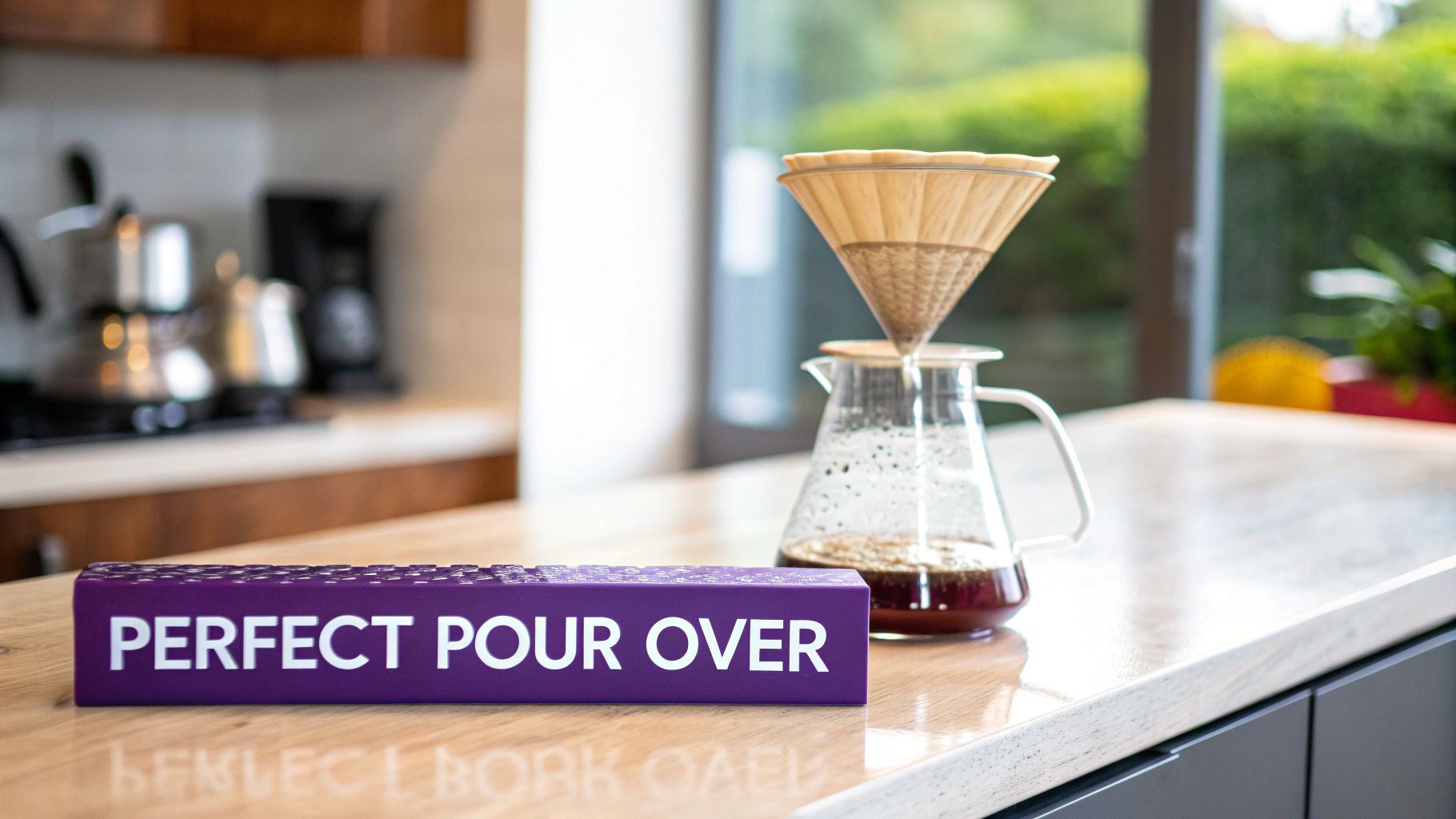
You’ve brought home a bag of exceptional single origin coffee, a product of a unique place and a specific harvest. Now for the fun part: unlocking all of its nuanced flavours right in your own kitchen. Brewing single origin beans is less about a rigid recipe and more about technique. The goal is to highlight the delicate, distinct notes that make this coffee so special.
Unlike a dark, robust blend designed for consistency, your approach here should aim for clarity and complexity. Think of it like cooking a prime cut of steak—you want a method that lets the high-quality ingredient speak for itself, not one that covers it up with heavy sauces. That means focusing on brewing methods that give you control and produce a clean cup.
Choosing the Right Brewing Method
Certain brewing methods are famous for their ability to bring out the subtle characteristics of a single origin coffee. While any method can make a decent cup, some are simply better suited for showcasing those bright, floral, or fruity notes you’re after.
-
Pour-Over (V60, Chemex): This is the undisputed champion for clarity. The slow, controlled pour over a paper filter removes most oils and sediment, resulting in a crisp, clean cup. It’s perfect for highlighting the delicate floral notes in an Ethiopian coffee or the bright acidity of a Kenyan bean.
-
AeroPress: This is a versatile and forgiving brewer that combines immersion and pressure. It can produce a clean, vibrant cup similar to a pour-over, but it can also deliver a richer, more concentrated brew if that’s what you’re in the mood for. Its speed and control make it fantastic for experimenting.
Brewing single origin coffee is an act of translation. Your goal is to translate the story of the bean—its origin, varietal, and processing—into the language of flavour, aroma, and body in your cup.
Mastering the Key Variables
To truly honour your single origin beans, you need to pay close attention to a few critical variables. Small adjustments here can dramatically change the final taste, turning a good cup into an unforgettable one.
Grind Size Matters
Grind size is probably the most important variable you can control. Getting it right ensures you extract the perfect amount of flavour—not too much (bitter) and not too little (sour).
- For Pour-Over: A medium grind, similar to the consistency of table salt, is ideal.
- For AeroPress: A medium-fine grind works well for most standard recipes.
- For French Press: A coarse grind, like rough sea salt, is necessary to prevent a muddy cup.
Always use a burr grinder for a consistent grind. Blade grinders create an uneven mix of fine dust and large chunks, which leads to a poorly extracted, unbalanced brew.
Water Temperature and Ratio
Getting your water just right is essential for a balanced extraction. Water that’s too hot can scorch the grounds and create bitterness, while water that’s too cool won't pull out enough flavour.
-
Ideal Temperature: Aim for water between 92–96°C (195–205°F). A simple way to get there without a special kettle is to bring water to a boil, then let it sit for about 30 seconds before you pour.
-
Coffee-to-Water Ratio: A great starting point for most methods is a 1:16 ratio—that’s 1 gram of coffee for every 16 grams (or millilitres) of water. For a standard 300 ml cup, you’d use about 18-19 grams of coffee.
While pour-over methods are fantastic for hot coffee, some single origin beans have qualities that make them incredible for cold brewing—think Brazilian beans with their low acidity and rich chocolate notes. For a deeper dive, check out our guide on how to make your own cold brew coffee concentrate.
Why Coffee Traceability and Sustainability Matter
Knowing where your coffee comes from is about so much more than just flavour—it’s about impact. The rise of **single origin coffee** has pulled **traceability** into the spotlight, creating a clear, transparent line from the farm right to your cup. This isn't just a feel-good story; it’s a powerful tool for building a more sustainable and fair coffee industry.
When you choose a traceable coffee, you're not just looking at tasting notes. You're seeing the specific farm, the community, and the people whose hard work produced those incredible beans. This visibility is vital because it helps ensure farmers get paid fairly for a premium product, letting them invest in better farming practices and improve their lives.
Supporting Ethical and Environmental Practices
Traceability and sustainability are two sides of the same coin. When a supply chain is transparent, roasters and coffee drinkers can actually verify that the coffee they buy is grown using environmentally friendly methods. This covers everything from shade-grown cultivation that protects biodiversity to smart water conservation techniques used during processing.
By supporting these practices, you become part of a positive cycle. Farmers are empowered to protect their local ecosystems, which in turn leads to healthier coffee plants and a more resilient agricultural system for generations to come.
Traceability transforms your daily coffee from a simple commodity into a conscious choice. Each cup becomes a vote for fair wages, environmental stewardship, and a direct connection to the global coffee community.
Your Role in a Better Coffee Future
Every bag of high-quality single origin coffee you buy sends a clear message to the industry: transparency matters. It encourages a shift away from anonymous, commodity-grade coffee and toward a model that values and rewards quality right at the source. This doesn't just guarantee a better-tasting coffee for you; it fosters a more just and sustainable future for coffee growers worldwide.
When roasters build direct relationships with producers, it creates a foundation of trust and mutual respect. These partnerships are essential for long-term sustainability, ensuring the world’s best coffee regions can thrive for years to come. Exploring the benefits of partnering with a locally roasted coffee provider is a great way to support this mission right in your own community.
By choosing traceable single origin beans, you're actively participating in a global movement. You’re not just buying a premium product; you’re investing in the people and places that make your morning ritual possible, helping to build a stronger, fairer, and more delicious coffee world for everyone.
Got Questions About Single Origin? We've Got Answers.
As you start exploring the incredible world of single origin coffee, it’s only natural for a few questions to pop up. Think of this as your friendly guide, here to offer clear, straightforward answers that will help you feel more confident on your coffee journey. Let's tackle some of the most common ones we hear.
One of the biggest questions is whether single origin coffee is flat-out "better" than a blend. The honest truth? It all comes down to what you love in a cup. If you’re an adventurer chasing a unique, unforgettable flavour profile, single origin is for you. If you prefer a consistent and beautifully balanced cup every single time, a blend might be your perfect match.
Common Questions and Clear Answers
Another thing people often wonder about is the price. Why does single origin sometimes cost a bit more? That higher price tag is a direct reflection of its smaller scale and the meticulous care that goes into it. These beans come from specific, often limited, harvests, and preserving their unique character takes more effort from both the farmer and the roaster.
Can you use single origin for espresso? Absolutely. While many blends are designed to pull that classic, balanced espresso shot, a single origin espresso can be a real game-changer. You can expect a brighter, more complex, and often fruit-forward shot that puts the bean's unique terroir front and centre.
Proper storage is also a big deal for these special beans. To protect all those nuanced flavours, you'll want to store them in an airtight container away from direct sunlight, heat, and moisture. Oxygen is the enemy of freshness, so keeping it out is the most important thing you can do.
The Future of Coffee Origins
Interestingly, the map of where coffee comes from is always growing. We often think of the traditional "Bean Belt," but new regions are constantly proving they have what it takes. For instance, California is starting to emerge as a really promising area for high-quality coffee. Research has pinpointed over 230 square kilometres of farmland in coastal California that’s thermally suitable for growing coffee, all thanks to its unique mix of cool ocean breezes, complex soils, and evening fog. You can read the full research about these findings to learn more.
This constant evolution is part of what makes single origin coffee so exciting. It’s a continuous journey of discovery, offering new tastes and stories from classic regions and unexpected corners of the globe alike.
Ready to explore the distinct flavours and stories behind each cup? At East End Annie's, we source and roast exceptional beans that tell the story of their origin. Discover your next favourite brew and shop our collection today at https://eastendannies.ca.