

How to Store Coffee Beans for Peak Freshness
To get the most out of your coffee, you have to protect it from its four biggest enemies: air, moisture, heat, and light. The best way? Keep your whole beans in an opaque, airtight container and stash it in a cool, dark spot like a pantry. This simple setup is your best defence against stale coffee, preserving the delicate flavours and aromas you paid for.
The Four Enemies of Fresh Coffee
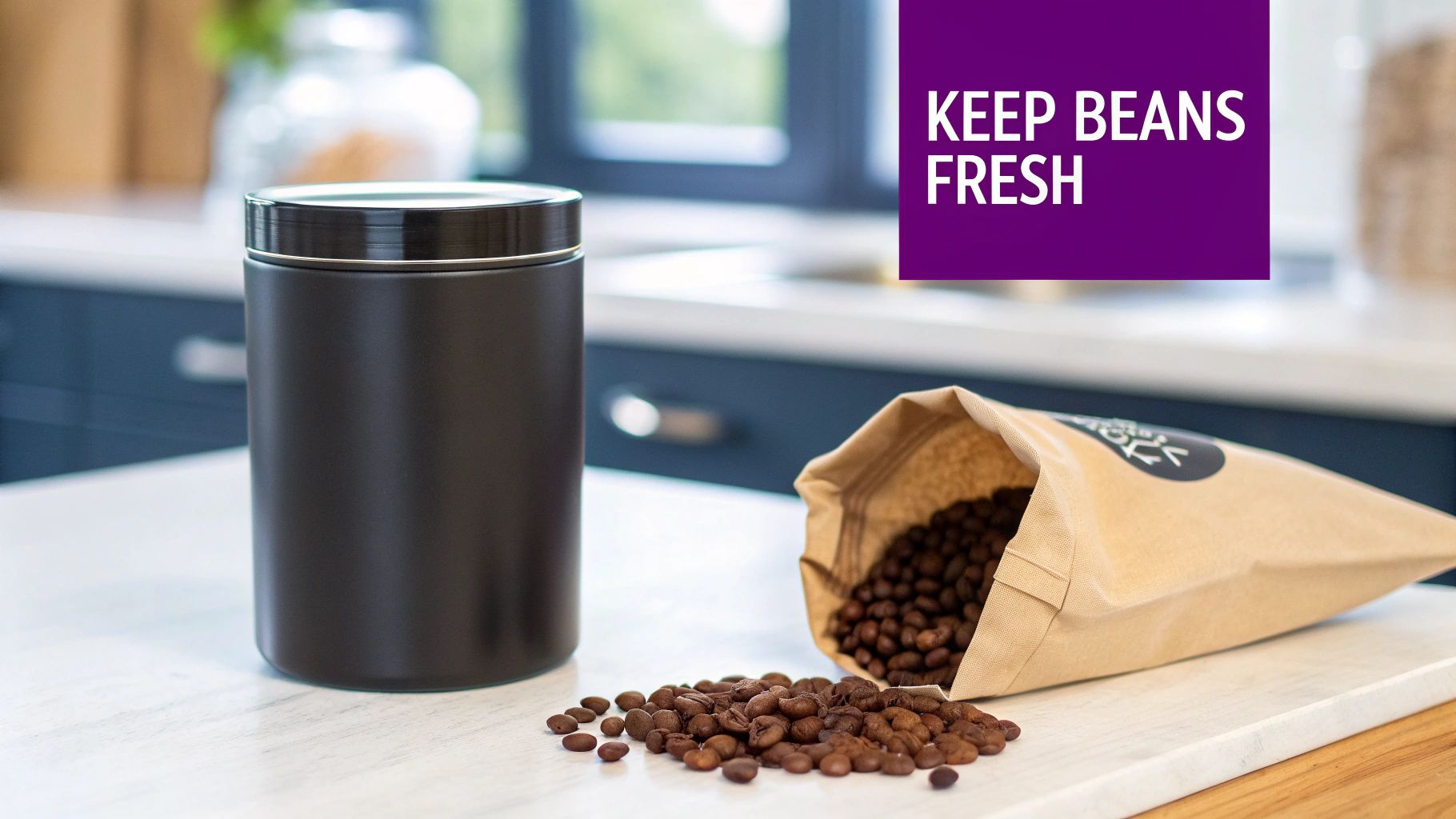
The moment you open a new bag of coffee, the clock starts ticking. Preserving that incredible, just-roasted flavour means understanding what makes it fade. It’s not complicated—it really just boils down to shielding your precious beans from a few common culprits found in every kitchen.
Think of your coffee beans as delicate ingredients. You wouldn’t leave fresh produce out on the counter in the sun, and your coffee deserves the same thoughtful care. Protecting it is the single most important thing you can do to guarantee a better-tasting cup every single morning.
Meet the Flavour Killers
The enemies of freshness are simple but destructive. Each one plays a role in turning vibrant, aromatic beans into something flat and disappointing.
- Air (Oxygen): Oxygen is the main adversary. It causes oxidation, a chemical process that breaks down the delicate oils and aromatic compounds responsible for coffee's complex flavour and aroma. The result? Coffee that tastes stale and lifeless.
- Moisture: Coffee beans are surprisingly porous and will soak up moisture and odours from the air around them. This can lead to mould or, more commonly, just make your beans taste musty and unpleasant.
- Heat: Heat acts like a fast-forward button for the oxidation process, essentially "cooking" the volatile oils right out of your beans. Storing coffee near a stove, dishwasher, or a sunny window is a recipe for blandness.
- Light: Direct sunlight and even strong artificial light will degrade the quality of your coffee. The UV rays break down the compounds that give coffee its unique character, which is exactly why opaque containers are so essential.
Improper storage is a widespread issue. Research shows that beans left at room temperature can lose up to 30% of their volatile compounds after just one month. In contrast, beans kept in airtight containers in a cool pantry hold onto over 90% of their flavour for up to two months.
The goal is straightforward: create a stable environment. A cool, dark, and dry place is your coffee’s best friend. This is why a pantry or cupboard is a far better home for your beans than the kitchen counter.
By controlling these four elements, you take charge of your coffee’s destiny. It's a small effort that pays huge dividends in flavour, ensuring the coffee you bought from your favourite local roaster tastes as amazing as it should. This is especially true when you invest in high-quality, locally roasted coffee that deserves the best care.
Choosing the Right Coffee Storage Container
The container you pick is your first and most important line of defence in the battle for freshness. That beautiful glass jar might look great on your kitchen counter, but it could be the very thing making your coffee taste flat and lifeless.
Think of it this way: your coffee container is like a tiny, personal vault for your beans. Its sole job is to protect them from the outside world—specifically, the four enemies of freshness. Let’s break down what to look for and, just as importantly, what to avoid.
Material Matters Most
The material of your canister directly impacts its ability to block out heat, light, and moisture. Each option has its own pros and cons.
- Stainless Steel: This is often considered the gold standard. It’s completely opaque, tough as nails, and won't hang onto old odours or flavours from previous batches. A high-quality stainless steel container is an investment that pays off with every fresh cup.
- Ceramic: Just like stainless steel, ceramic is fantastic at blocking light. A ceramic canister with a solid, airtight seal is a stylish and highly effective choice for keeping your beans tasting their best.
- Glass: While popular for aesthetics, glass containers are usually a poor choice unless they're opaque or you plan to store them in a completely dark cupboard. Clear glass offers absolutely zero protection from light, which rapidly breaks down your coffee’s quality.
No matter what material you lean towards, opacity is non-negotiable. If light can get in, it will destroy the delicate oils and aromatic compounds that give your coffee its wonderful character.
The Anatomy of an Airtight Seal
The term "airtight" gets thrown around a lot, but not all seals are created equal. A truly effective seal creates a barrier that stops new oxygen from getting in and wrecking your beans. Look for containers with thick silicone gaskets or clamping mechanisms that create a firm, reliable closure.
This is why the original roaster bag, even one with a zip-lock, is only a temporary fix. It's rarely perfectly airtight and offers limited protection once you've opened it. Transferring your beans is always the better long-term strategy for preserving flavour.
Your goal is to create a stable, protected environment. A container that is both opaque and truly airtight is the foundation of any successful coffee storage system.
Demystifying the Degassing Valve
You've probably noticed those little plastic circles on coffee bags. That's a one-way degassing valve, and it's a brilliant piece of engineering. Freshly roasted coffee releases a huge amount of carbon dioxide (CO2) for several days after roasting—a process called degassing.
This clever valve allows that CO2 to escape without letting destructive oxygen sneak in. For just-roasted beans, a container with a degassing valve is ideal because it prevents the bag or canister from puffing up or even bursting, all while shielding the beans from oxidation. While it’s not as critical for beans that are a week or more past their roast date, it’s a crucial feature for preserving that peak freshness.
Specialized canisters like an Airscape take this a step further. They feature an inner lid that you press down, actively forcing excess air out before sealing the container, rather than just locking it out. This makes a noticeable difference, especially if you’re opening your container every day to make a brew.
The Truth About Freezing Your Coffee Beans
Ah, the freezer. When it comes to coffee, this is one of the most polarizing topics out there. Some coffee lovers swear by it for long-term storage, while others will tell you it’s the quickest way to ruin a perfectly good bag of beans.
The truth? It’s somewhere in the middle. It all comes down to your technique.
First things first, let's get one thing straight: the refrigerator is not your friend. Your fridge is a high-humidity environment, full of funky smells and fluctuating temperatures. Coffee beans are porous, meaning they'll absorb moisture and odours like a sponge. Nobody wants notes of last night's stir-fry in their morning Americano. Condensation is the real killer here, forming every time you take the bag out and rapidly degrading the beans.
Freezing, on the other hand, can be a great strategy for long-term storage, but only if you do it right. It’s the perfect solution for when you buy in bulk from a local spot like East End Annie’s or want to tuck away a special, limited-edition roast for a later date. You just can't toss the bag in and call it a day.
This infographic lays out the core principles of proper storage, which become even more critical when you bring the freezer into the mix.
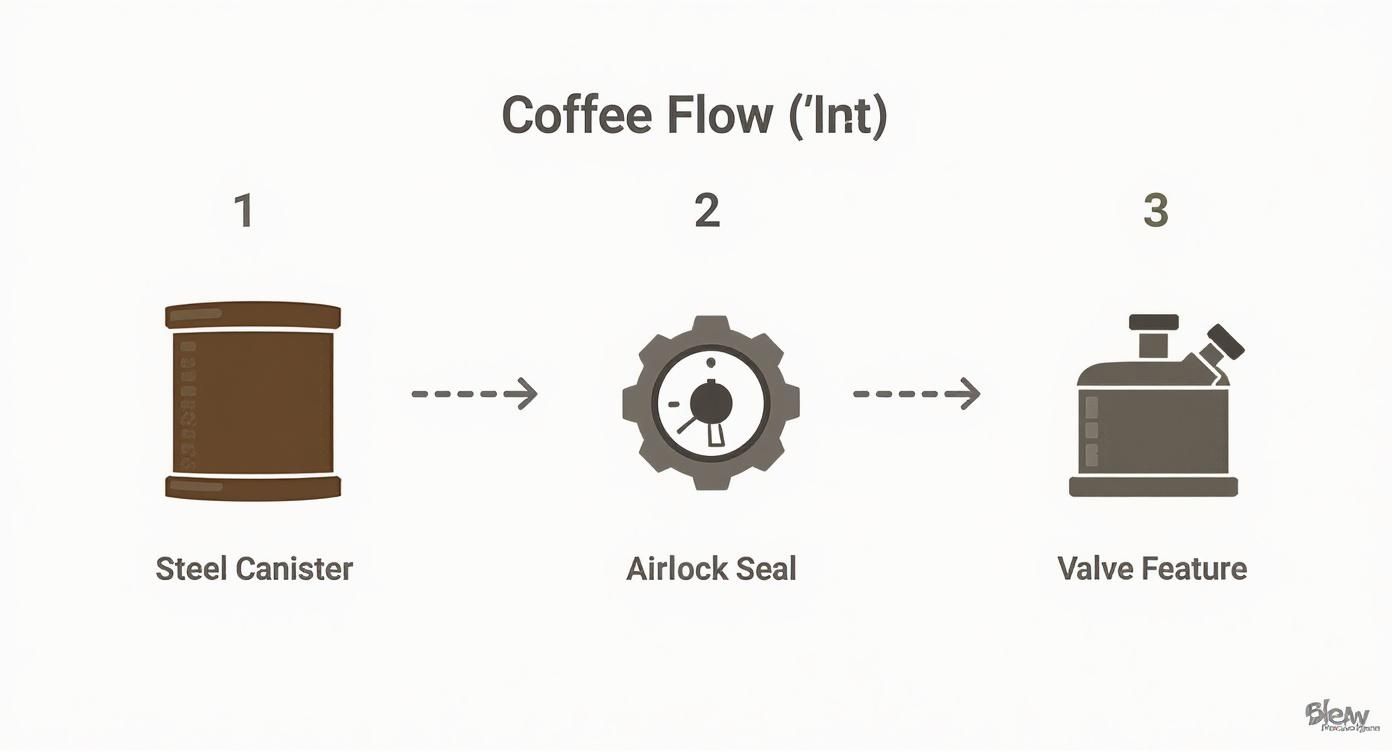
As the visual shows, the container, the seal, and features like degassing valves are all designed to protect your beans from their greatest enemies: air, moisture, heat, and light.
The Right Way to Freeze Coffee Beans
When you freeze coffee, your goals are simple: drop the temperature way down while eliminating any exposure to oxygen and moisture. Research has shown that for every day a bean spends in a typical home freezer at -18°C, it's like 90 days of aging at room temperature. That’s how effective freezing can be at hitting the "pause" button on staling.
So, if you’re going to do it, here are the non-negotiable rules:
- Portion Control is Key: Never, ever freeze a large bag of beans that you’ll be opening and closing again and again. You need to divide your coffee into small, single-use portions—just enough for a week, or even a single brew.
- Airtight is Everything: A vacuum sealer is the gold standard here because it yanks almost all the oxygen out of the package. No vacuum sealer? A heavy-duty freezer bag will do the trick. Just put your beans inside, seal the bag almost all the way, insert a straw, suck out as much air as you can, and then quickly pull the straw out as you seal it completely.
- Label Everything: Seriously. Mark each portion with the name of the coffee and the date you froze it. This helps you keep track and ensures you’re always using the oldest beans first.
The golden rule of freezing coffee is simple: once thawed, never refreeze. Every time the temperature changes, condensation forms, and that moisture will destroy the cellular structure and delicate flavours of your beans.
Thawing Your Beans Correctly
When you're ready to enjoy your frozen coffee, pull just one portion from the freezer. Here’s the most important part: let it thaw completely unopened on the counter for several hours or even overnight. This step is crucial. It allows the beans to return to room temperature slowly, preventing condensation from forming on their surface.
Only after the package is fully thawed and at room temperature should you open it. Grind the beans and brew them immediately for the best taste. While some pros argue that grinding beans while still frozen can create a more uniform particle size, for most home grinders, letting them thaw first is the safest bet to protect your equipment and guarantee a delicious, fresh-tasting cup.
How Long Do Your Coffee Beans Actually Stay Fresh?
Knowing the real shelf life of your coffee is the secret to getting that perfect, flavourful cup every single time. Coffee doesn't "go bad" in the same way milk does, but it absolutely loses the vibrant aromas and tastes that make it special. The clock on freshness starts ticking the moment those beans come out of the roaster.
One of the biggest misunderstandings comes from confusing a "best before" date with a "roasted on" date. That "best before" date is often months, sometimes even a year, down the road. But the "roasted on" date? That’s the one that really tells you the truth about when your coffee was at its absolute peak.
The Lifespan of Whole Beans
For whole coffee beans, that window of peak flavour is shorter than most people think. You'll get the most complex, aromatic, and delicious notes anywhere from about four days to three weeks after the roast date. This is the sweet spot. The beans have had just enough time to degas (release trapped CO2 from roasting) but haven't started going stale from oxidation.
Once you hit the one-month mark, you'll notice a real drop-off in flavour. The coffee is still perfectly fine to drink, but it will taste much flatter and less dynamic. This is exactly why it's always better to buy smaller bags from a local roaster more often, rather than grabbing a massive bag from the grocery store that will sit around for ages.
Think of it like fresh bread. It's at its absolute best within a couple of days of coming out of the oven. Sure, you can still eat it a week later, but it's lost that incredible texture and taste. Your coffee beans are no different.
When it's time to restock, browsing a hand-picked selection of freshly roasted coffee beans ensures you're always starting with the best product possible.
The Rapid Decline of Ground Coffee
Grinding coffee is like hitting the fast-forward button on the staling process. It dramatically increases the bean's surface area, exposing it to way more oxygen. Because of this, pre-ground coffee loses a huge amount of its aroma and flavour within 15 to 30 minutes of being ground.
If you buy your coffee pre-ground, do your best to use it within a week of opening the bag. Storing it in an airtight container will help, but it can't completely stop the inevitable decline. Honestly, grinding your beans right before you brew is the single biggest upgrade you can make to your daily coffee game.
Unroasted Green Beans: A Different Story
Now, unroasted (or green) coffee beans are a completely different animal. Their delicate oils and flavour compounds are still locked away, safe and sound, because they haven't been through the roasting process. This makes them far more stable.
When they're stored properly in a cool, dark place with stable humidity, green coffee beans can stay fresh and viable for over a year. This is why roasters can source incredible beans from all over the world and keep them on hand until they're ready to create that perfect roast profile. For most of us brewing at home, though, sticking to freshly roasted beans is the clear path to the best-tasting cup.
A Smart System for Managing Your Coffee Supply
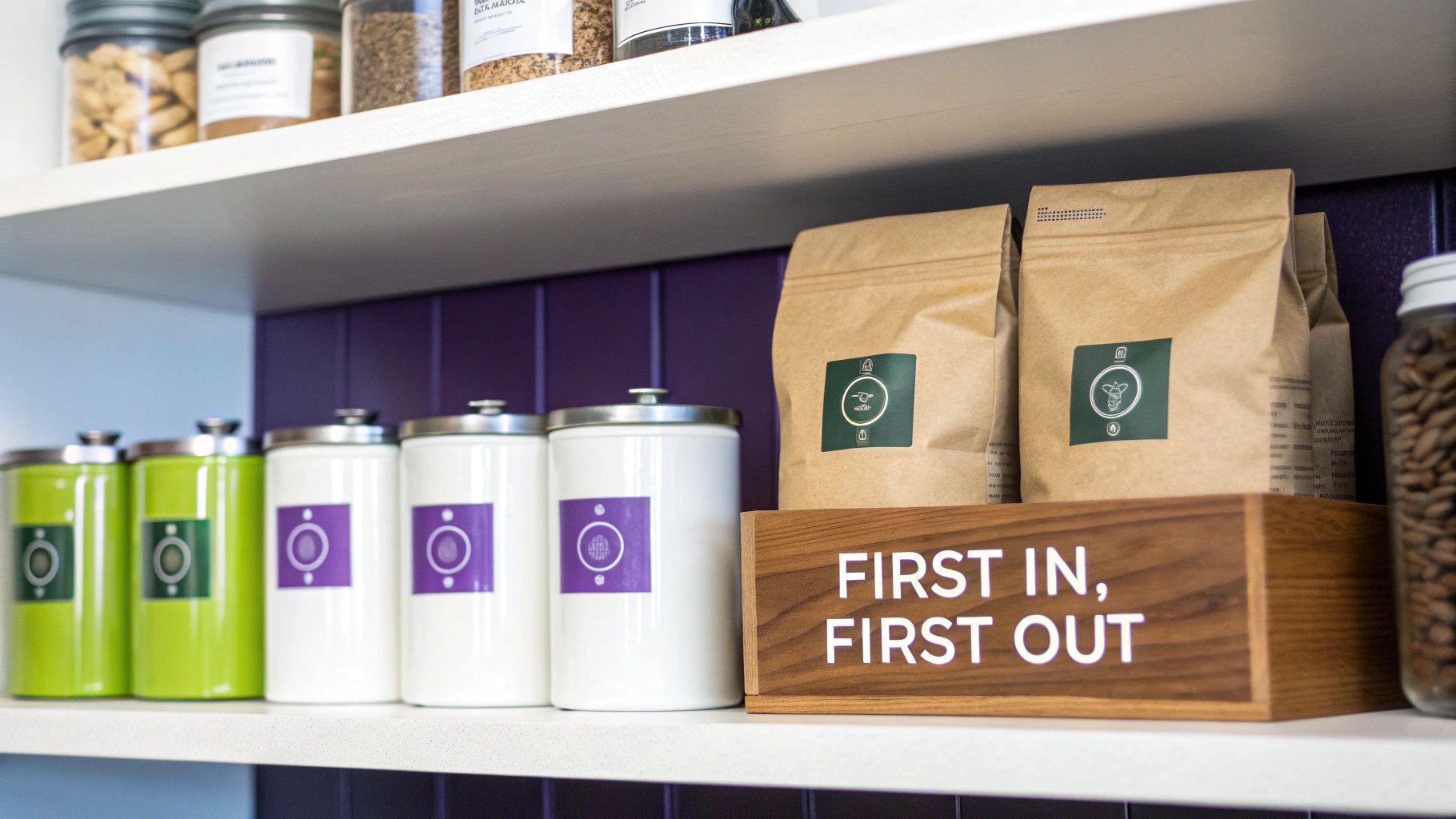
True coffee freshness is about more than just the right container. It's about smart buying habits and a simple rotation system that creates a seamless flow from the roaster to your grinder, ensuring you never have to settle for a stale, disappointing brew.
Developing this rhythm is key to avoiding overstocking. We’ve all been tempted to buy in bulk, but this often leads to beans aging in the back of the cupboard long past their peak. The trick is to find that sweet spot between having enough coffee on hand and making sure it’s always at its best.
The First-In, First-Out Method
The best way to manage your coffee is with a time-tested system used in professional kitchens everywhere: First-In, First-Out (FIFO). The concept couldn't be simpler: the first bag of coffee you buy is the first one you use.
Imagine you have two bags of coffee. One was roasted three weeks ago, and the other just landed on your doorstep yesterday. It’s natural to reach for the newest one, but FIFO corrects this instinct. You’ll always grab the oldest stock first, which dramatically reduces waste and guarantees every cup is brewed within its prime window.
To make it work, just place new bags of coffee at the back of your shelf and slide the older ones to the front. This little habit makes it effortless to grab the correct bag, even during a hectic morning.
By consistently using your oldest beans first, you transform your pantry from a coffee graveyard into a dynamic, fresh supply chain. It’s a small change in habit that makes a massive difference in taste.
How Much Coffee Should You Buy?
The ideal amount of coffee to buy at once comes down to one thing: how much you drink. A good rule of thumb is to purchase only what you’ll consume within two to three weeks. This timeframe lines up perfectly with the peak freshness window for whole beans.
Here’s a practical way to figure out your magic number:
- Track Your Usage: For one week, keep a casual note of how many grams of coffee you use each day.
- Calculate Your Needs: Multiply that daily number by 14 (for two weeks) or 21 (for three weeks). This tells you exactly how much coffee to buy.
For instance, if you brew a 25-gram pour-over every morning, you’ll go through about 350 grams in two weeks. A standard 340g bag is perfect for your needs. This simple math stops the guesswork and prevents you from buying a huge bag that goes stale before you can finish it.
Managing Coffee Subscriptions
Coffee subscriptions are a fantastic way to explore new beans and keep a steady supply flowing. But without a bit of management, they can quickly lead to a coffee surplus. If you find yourself with multiple bags piling up, that same FIFO principle is your best friend.
When a new shipment arrives, check the roast date and line the bags up in your pantry accordingly, with the oldest at the front. For anyone looking to simplify their routine, East End Annie's coffee subscriptions deliver fresh, locally roasted beans right on schedule, making it easier to manage your supply without overbuying.
An unopened, sealed bag from a roaster offers excellent protection, so keep new arrivals in your cool, dark pantry until you’re ready for them. Once you crack one open, transfer the beans to your primary airtight container and put that bag at the front of your rotation. This organized system ensures every delivery is enjoyed at its absolute best.
Got Questions About Storing Your Coffee? We’ve Got Answers.
Even with the best intentions, figuring out how to store coffee beans can leave you scratching your head. It’s totally normal to wonder if you’re doing it right, especially with so much conflicting advice floating around. Let's clear the air and tackle some of the most common questions we hear.
Getting these details right is what separates a decent cup of coffee from a truly great one. These are the practical, real-world questions that come up in kitchens just like yours every single day.
Can I Just Keep My Beans in the Original Bag?
This is easily the most frequent question we get, and the answer is: it depends, but probably not for long. If your roaster's bag has a sturdy zip-lock and a one-way degassing valve, it’s a decent temporary home for your beans—think one to two weeks, tops.
The problem is, these bags are rarely 100% airtight and often aren’t fully opaque. To preserve that peak flavour for longer than a week or so, your best move is always to transfer the beans into a proper airtight container right after you open the bag. Simple paper or thin plastic bags? They offer almost no protection and should be thought of as just getting-it-home packaging.
Is Storing Ground Coffee Really That Different From Whole Beans?
Yes, and the difference is massive. Whole coffee beans have a much smaller surface area exposed to oxygen, which lets them hang onto their delicate flavours and aromas for weeks. Grinding the beans blows that surface area wide open, causing the coffee to go stale at a shocking speed.
The aromatic compounds that make coffee so incredible are volatile. Once ground, they start to disappear almost immediately, with noticeable flavour loss in as little as 15-30 minutes.
This is why the single best thing you can do for your coffee is to store it as whole beans and grind only what you need just moments before you brew. If you have to buy pre-ground coffee, grab it in small quantities and try to use it within a week for the best possible taste.
What’s the Perfect Temperature for Storing Coffee?
You don't need a special climate-controlled room, but a stable environment is definitely key. The sweet spot is a cool, consistent room temperature, typically somewhere between 10°C and 21°C.
More important than the exact number on the thermometer is avoiding heat sources. Keep your coffee container far away from the oven, the dishwasher, or a window that gets blasted with direct afternoon sun. Heat acts like an accelerator for the oxidation process that makes beans taste flat and lifeless.
A dark cupboard or a pantry is the perfect hideout. It protects your beans from temperature swings, which can create condensation inside your container—and that’s a fast track to musty, stale coffee.
Ready to brew with beans that are always at their peak? East End Annie’s offers a curated selection of locally roasted coffee that's perfect for your new storage setup. Explore our fresh coffee collection today.