

A Brewer’s Guide to Cold Drip Coffee Concentrate
Imagine a coffee so smooth and intensely flavourful it feels less like a morning pick-me-up and more like a fine liqueur. That’s the magic of cold drip coffee concentrate—a luxurious, slow-brewed elixir created by painstakingly dripping cold water over coffee grounds for hours on end. This patient process coaxes out complex flavours without the harsh bitterness you often find in hot-brewed coffee.
What Is Cold Drip Coffee Concentrate
At its heart, cold drip coffee concentrate is the purest expression of the coffee bean. It’s a world away from its more common cousin, immersion cold brew, where grounds are simply steeped in water. The cold drip method is a far more delicate and controlled extraction. Think of it as an artisan carefully sculpting a masterpiece, one single drop at a time.
This slow, gravity-fed process, often taking anywhere from three to twelve hours, prevents the release of bitter oils and acidic compounds. What you’re left with is a velvety, aromatic, and intensely flavourful liquid that serves as a powerful base for all kinds of drinks.
The Art of Slow Extraction
The beauty of cold drip lies in what it leaves behind. By sidestepping heat entirely, the process preserves the subtle, volatile aromatic compounds that give coffee its captivating scent and taste. The final concentrate is:
- Exceptionally Smooth: The low acidity makes it incredibly gentle on both your palate and your stomach.
- Rich in Flavour: It spotlights nuanced notes like chocolate, fruit, and florals that are often steamrolled by heat.
- Highly Concentrated: A small amount goes a long way, providing a robust coffee flavour that makes it incredibly versatile.
The beauty of cold drip coffee concentrate is its purity. It’s a clean, complex, and unadulterated reflection of the coffee bean’s origin, offering a sensory experience that is both sophisticated and deeply satisfying.
To give you a clearer picture, here’s a quick summary of what makes this concentrate special.
Cold Drip Concentrate at a Glance
| Characteristic | Description |
|---|---|
| Brewing Method | Slow, gravitational drip of cold water over coffee grounds. |
| Brew Time | Typically 3 to 12 hours. |
| Flavour Profile | Exceptionally smooth, low acidity, with pronounced sweetness and complexity. |
| Concentration | Very high; designed to be diluted for serving. |
| Acidity Level | Significantly lower than hot-brewed coffee. |
| Versatility | Ideal for iced lattes, cocktails, and even culinary recipes. |
As you can see, this isn't just another way to make cold coffee—it's a method that elevates the bean to its highest potential.
A Growing Craft Coffee Trend
This meticulous method is more than just a brewing technique; it’s part of a larger movement toward craft coffee experiences. The rising demand for smoother, less acidic coffee has fuelled some serious growth in the concentrate market. In fact, the U.S. coffee concentrate market size is projected to hit $25.1 million by 2030, which is a testament to how many people are seeking out higher-quality cold coffee options.
This growth is just one slice of the coffee industry's massive economic footprint, which reached an incredible $343.2 billion in the United States in 2022 alone, with consumers spending nearly $110 billion on their favourite brew. You can get more details on these market trends and their drivers from KBV Research's coffee concentrate market analysis.
As you’ll discover, this concentrate isn’t just coffee; it’s an ingredient. It’s the foundation for a perfect iced latte, a bold coffee cocktail, or even a surprisingly delicious addition to savoury recipes. Its clean profile and powerful taste make it a staple for anyone who truly appreciates the art and science of a great brew.
Understanding the Cold Drip Brewing Process
The magic of cold drip coffee concentrate comes to life inside a stunning, almost lab-like piece of equipment: the cold drip tower. Sometimes called a Kyoto or Dutch coffee maker, this device uses just ice, water, and coffee to create an incredible concentrate through a slow, patient, gravity-fed journey. It’s less like brewing and more like a careful, methodical extraction.
Think of it like a sculptor gently chipping away at a block of stone to reveal the art within. Instead of using brute force or heat, the cold drip tower leverages time and gravity. Each drop of water gets its moment to work on the coffee grounds, unlocking nuanced flavours without any of the harsh bitterness or high acidity that heat can introduce.
The Three Chambers of Flavour
A cold drip tower is usually made of three distinct glass chambers stacked one on top of the other. Each one has a specific, vital role in crafting the final cold drip coffee concentrate.
- The Top Chamber (Ice Water Reservoir): This is where it all starts. This chamber holds your cold filtered water and ice. At its base is a small, adjustable valve—the heart of the entire operation—that controls the brew by releasing water one precise drop at a time.
- The Middle Chamber (Coffee Grounds): Here, a bed of medium-fine ground coffee is waiting. A paper or metal filter sits just underneath the grounds, making sure water spreads out evenly and no sediment sneaks into the final brew.
- The Bottom Chamber (Collection Carafe): This is the destination. Over several hours, the beautiful, dark, and aromatic concentrate slowly gathers here, one precious drop after another.
The whole process is a sight to behold. Watching the drops form and fall, you can almost see the flavour being pulled from the grounds in slow motion. This patient, methodical journey is what makes cold drip so different from every other brewing method out there.
This simple visualization shows how hours of slow dripping create a superior coffee concentrate.
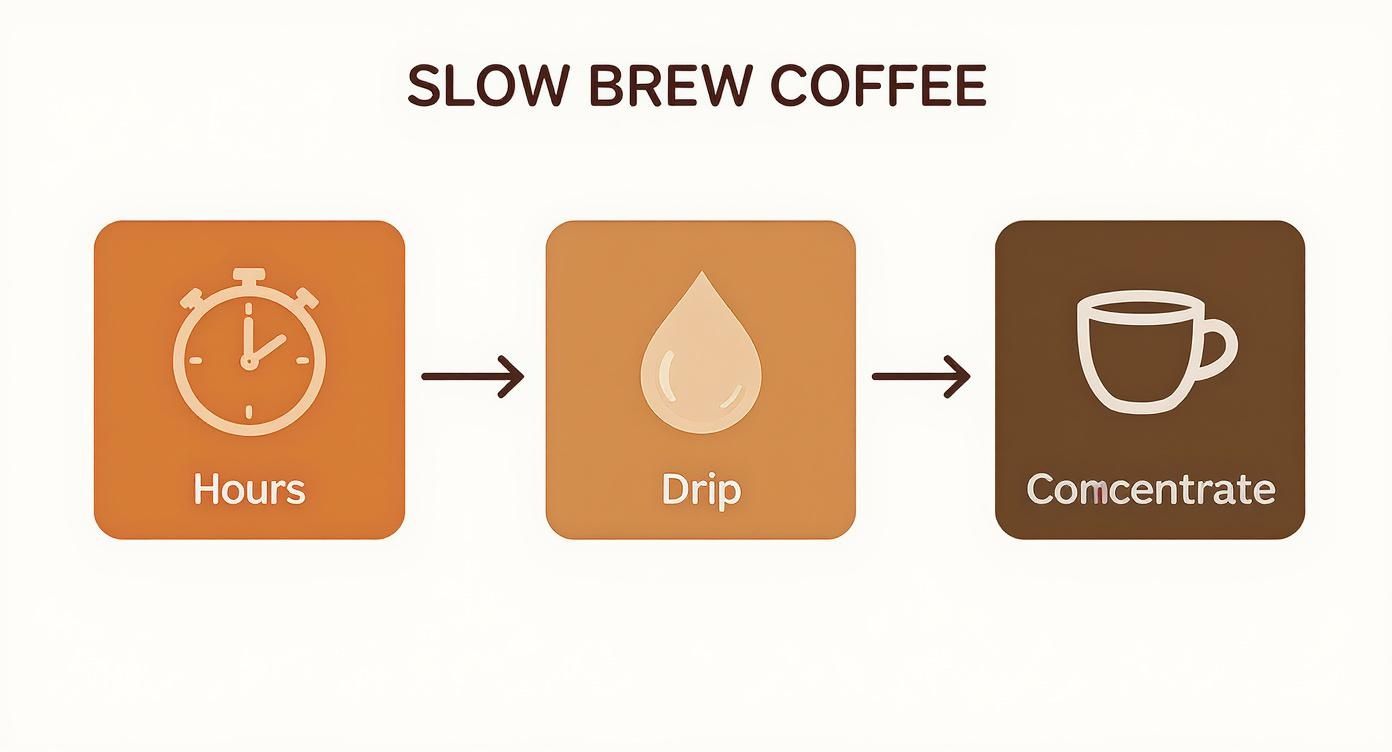
As the infographic shows, the long contact time and controlled drip rate are the keys to producing a smooth, low-acidity concentrate.
Why Time Is the Secret Ingredient
A full cold drip brew can take anywhere from three to twelve hours, sometimes even longer. This isn't just for show; that extended time is absolutely essential for developing the concentrate's signature smooth profile. Hot water brewing is fast and aggressive, ripping out all sorts of compounds quickly—including the bitter and acidic ones we don't always want.
In contrast, the cold drip method is a delicate dance between water and coffee. The slow, non-heated extraction selectively pulls out desirable flavour compounds while leaving the undesirable, bitter oils and acids behind in the grounds.
This is exactly why the final product is so remarkably smooth and aromatic. You get to taste the pure essence of the coffee bean, unmasked by the harshness of heat. For more insights into achieving the perfect brew, you can explore our guide to good coffee with expert tips for 2025.
Mastering the Drip Rate
The single most critical variable you can control in this process is the drip rate, which is managed by that tiny valve on the top chamber. A great starting point is about one drop every one to two seconds.
- A faster drip will give you a weaker, under-extracted concentrate and a shorter brew time.
- A slower drip allows for a more thorough extraction, creating a richer and more flavourful concentrate, though it will take longer.
Finding the perfect drip rate is part of the art of making cold drip coffee. It invites you to experiment and fine-tune, letting you tailor each batch to your exact liking. This level of control is what makes the process so rewarding and the final concentrate so exceptionally delicious.
Cold Drip Compared to Other Brewing Methods
When you dive into the world of chilled coffee, it’s easy to get tangled in the terminology. But lumping cold drip in with other cold coffees is like comparing a slow-simmered stew to a flash-fried steak. Sure, they’re both delicious, but the process, the gear, and the final taste are worlds apart. True cold drip coffee concentrate is its own thing entirely, miles away from its more common cousins.
Let’s break down what really sets this meticulous brew apart from the rest of the cold coffee family. Getting these differences is the key to understanding why cold drip is so often praised for its refined, complex character.
Cold Drip Versus Immersion Cold Brew
This is where most of the confusion happens, but the two methods couldn't be more different in their approach. Immersion cold brew—the kind most people make at home in a big jar or a French press—involves soaking coarse coffee grounds in cold water for a long time, usually 12 to 24 hours. Think of it like making a giant batch of tea; it's a full-contact, passive steeping process.
Cold drip, on the other hand, is a controlled, hands-off affair. It uses gravity to slowly drip water, one drop at a time, through the coffee grounds. Each droplet extracts flavour on its own before passing through, meaning the grounds are never fully submerged for hours on end.
The core difference is process dynamics. Immersion is a static, passive soak, while cold drip is an active, gradual percolation. This active process creates a cleaner, brighter, and often more complex concentrate, bringing out floral and fruit notes that can get lost in the muddiness of an immersion brew.
Cold Drip Versus Iced Coffee
Here, the distinction is even more black and white. Iced coffee is just regular hot coffee that’s been brewed, left to cool, and then poured over ice. It’s quick and easy, but it comes with some serious baggage.
When hot coffee cools, it oxidizes, which can leave it with a stale, sour taste. And because it was brewed hot in the first place, it carries all the acidity and bitterness you’d expect from a standard drip or pour-over. The ice also melts fast, watering the whole thing down into a sad, flavourless drink.
Cold drip avoids heat completely, which is why its flavour profile is so unique.
- Acidity: It has up to 67% less acidity than hot-brewed coffee, making it incredibly smooth and easy on the stomach.
- Bitterness: The slow, cold extraction doesn’t pull out those harsh bitter compounds, resulting in a naturally sweeter taste.
- Strength: It produces a concentrate, so when you dilute it, the flavour stays bold and robust instead of getting watered down.
Cold Drip Versus Japanese-Style Iced Coffee
Japanese-style iced coffee is a fascinating hybrid that offers a third path. It involves brewing coffee hot—often with a pour-over brewer like a V60—directly onto a bed of ice waiting in the carafe below. The hot water extracts the bright, aromatic compounds, and the ice instantly chills the liquid, locking in those delicate flavours and stopping oxidation in its tracks.
This method is loved for its speed and its vibrant, clean taste. It captures the bright acidity of a hot brew without the stale aftertaste of traditional iced coffee. However, it still uses heat for extraction, which means it will always have more acidity than a true cold drip. The signature of cold drip is its deep, smooth, and rounded sweetness—a profile you can only get by taking heat out of the equation altogether.
Comparing Cold Coffee Methods
To really see how cold drip coffee concentrate stands apart, a side-by-side comparison makes all the difference. Each method has its own rhythm and produces a completely different kind of coffee.
Here's a quick look at how they stack up.
| Brewing Method | Process | Brew Time | Acidity | Flavour Profile |
|---|---|---|---|---|
| Cold Drip | Slow, gravitational dripping of cold water over grounds. | 3–12 Hours | Very Low | Smooth, sweet, complex, with bright floral and fruit notes. |
| Immersion Cold Brew | Coarse grounds are steeped in cold water. | 12–24 Hours | Low | Rich, chocolatey, full-bodied, with less nuanced aromatics. |
| Iced Coffee | Hot-brewed coffee cooled and poured over ice. | 5 Minutes | High | Often bitter, acidic, and can taste stale or watery. |
| Japanese-Style | Hot coffee brewed directly onto ice. | 5 Minutes | Medium | Bright, crisp, and aromatic, retaining some of the hot brew's acidity. |
Ultimately, the best method comes down to what you're looking for. But for anyone chasing a smooth, intensely flavourful, and low-acidity experience that puts the intricate notes of the bean front and centre, cold drip is truly in a class of its own.
Mastering Your Cold Drip Brew at Home
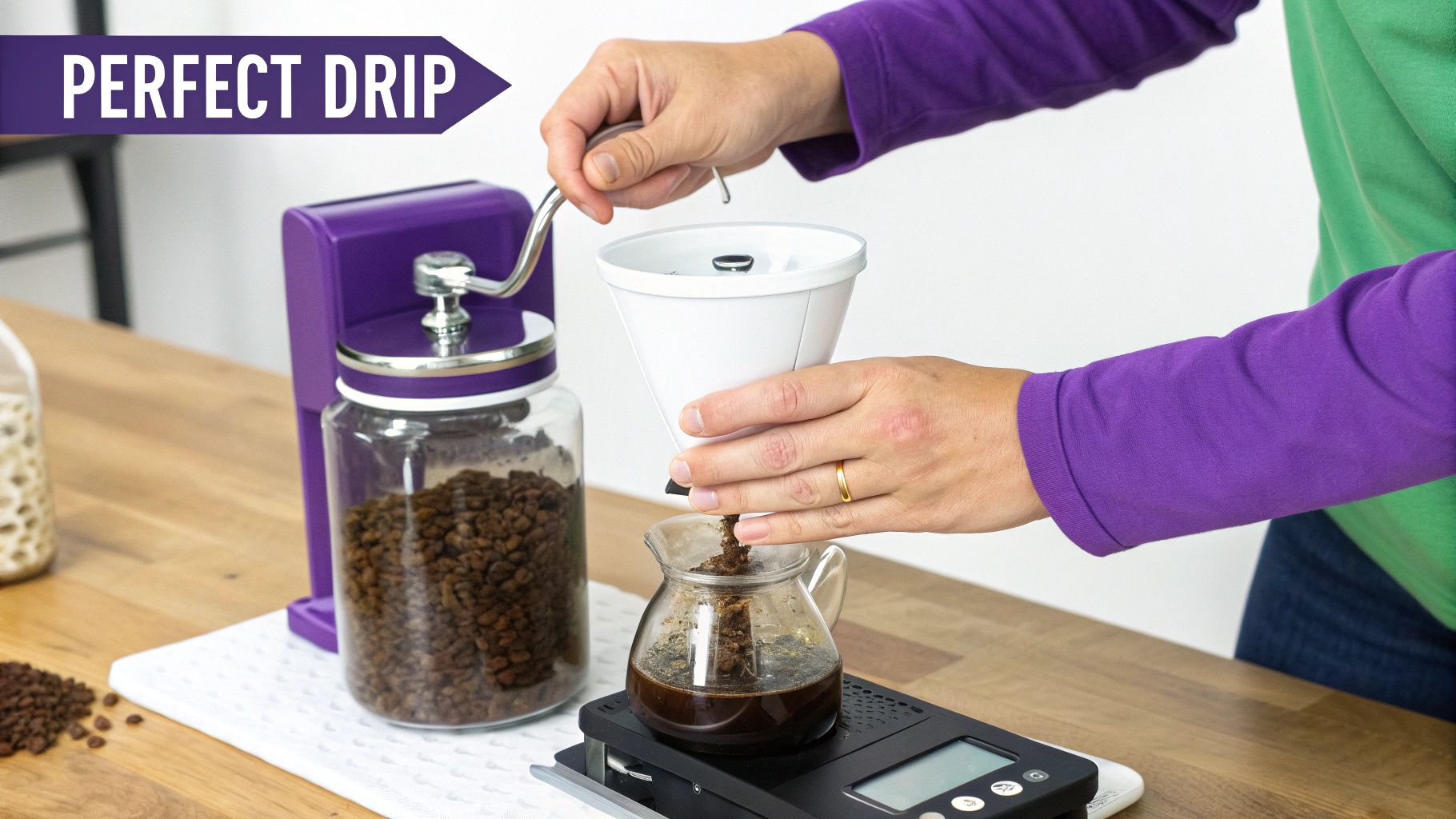
Making an exceptional cold drip coffee concentrate is a true art form, but don't worry—it's one you can easily master right in your own kitchen. Unlike more forgiving immersion methods, the slow drip process is all about precision. It rewards your attention to detail with a brew that’s incredibly smooth, complex, and deeply satisfying.
Think of it as transforming your countertop into a craft coffee lab. The journey starts, as always, with the coffee itself.
Selecting and Grinding Your Coffee Beans
The final quality of your concentrate hinges entirely on the beans you choose. Because the cold drip method is so good at highlighting clarity and nuance, single-origin beans with bright, fruity, or floral notes are fantastic choices. An Ethiopian Yirgacheffe or a light-roasted Colombian, for instance, will give you a beautifully delicate and aromatic brew.
Once you’ve got your beans, the grind is your next critical move. For a cold drip tower, you’ll want a medium-fine grind. Picture the texture of table salt—it’s a bit finer than you'd use for a French press but still coarser than a super-fine espresso grind. This sweet spot allows the water to saturate the grounds evenly without stalling the drip or, just as bad, rushing through too quickly.
For the absolute best flavour, always grind your beans right before you brew. Need some inspiration? Check out our hand-picked selection of locally roasted coffee beans that are perfect for this method.
Finding the Right Water to Coffee Ratio
Your water-to-coffee ratio is what dictates the strength and intensity of your final concentrate. A brilliant starting point for cold drip is a 1:8 ratio—that’s one part coffee to eight parts water, measured by weight. So, if you use 100 grams of coffee, you’ll want 800 grams (or 800 millilitres) of water.
This ratio creates a potent yet balanced concentrate that’s perfect for dilution. But this is your brew, so feel free to experiment! A 1:7 ratio will deliver a bolder, more intense result, while a 1:10 ratio will produce something lighter and more delicate.
Just remember, you're making a concentrate. It’s designed to be diluted with water, milk, or ice, so starting with a strong base gives you the most control over your final drink.
Key Practices for a Perfect Brew
With your coffee ground and your ratio figured out, a few small but mighty best practices will guarantee a successful extraction every single time. These are the little details that make a huge difference.
- Pre-Wet the Grounds: Before you start the drip, gently pour a little cold water over the coffee bed to make sure it's evenly saturated. This is often called "blooming," and it’s a crucial step to prevent dry pockets that lead to an uneven brew.
- Set the Ideal Drip Rate: The soul of the cold drip process is patience. You’re aiming for a drip rate of about one drop every one to two seconds. This slow, steady pace is what coaxes out all those sweet, complex flavours without a hint of bitterness.
- Use a Paper Filter on Top: This is a fantastic pro tip. Placing a circular paper filter right on top of the coffee grounds helps disperse the water droplets evenly. It’s a simple trick that stops the water from carving a channel through the coffee bed, leading to a much more balanced extraction.
This meticulous approach is part of a much larger shift in how we drink coffee. In the United States, cold brew consumption shot up by over 27% year-over-year as of 2024, with younger drinkers leading the charge. The U.S. cold brew market was valued at a massive $3.16 billion in 2024 and is only expected to grow, showing a clear preference for smoother, less acidic coffee experiences. You can dive deeper into this market trend in this detailed industry report.
Troubleshooting Common Brewing Issues
Even with perfect prep, you might hit a snag. The most common problem is a stalled brew, where the water just stops dripping. This is almost always caused by a grind that’s too fine, which creates a dense, muddy coffee bed that water can’t get through. If this happens, take a thin rod and gently stir the very top layer of the grounds to break up the clog.
If your brew turns out too weak, your drip rate was likely too fast or your grind was too coarse. On the flip side, a bitter concentrate usually points to a grind that was too fine or a brew that ran for way too long. Keep a little journal of your results and adjust your process for the next batch. Mastering your technique is all part of the rewarding journey.
Storing and Using Your Coffee Concentrate
After hours of patient dripping, you’re finally holding a beautiful batch of cold drip coffee concentrate. This liquid gold is potent, flavourful, and ready to be transformed. But before you start mixing up drinks, proper storage is what will protect those nuanced flavours you worked so hard to extract.
The secret to keeping your concentrate fresh is simple: keep it cold and away from air. Pour the finished brew into a clean, airtight container—a glass mason jar or a sealed bottle works perfectly. Stashed in the fridge, your cold drip concentrate will keep its peak flavour for up to two weeks.
That two-week window is your playground for exploring the incredible versatility of your brew. Since it's a concentrate, a little goes a long way, and its naturally low acidity makes it a fantastic base for all sorts of creations.
Dilution Ratios for Classic Drinks
Most of the time, you'll be using your concentrate to make a classic coffee, either hot or cold. Unlike regular coffee, you're in complete control of the final strength by deciding how much to dilute it. This puts you in the driver's seat of your final cup.
A great starting point for dilution is a 1:2 or 1:3 ratio. That means one part concentrate to two or three parts of your chosen liquid.
- For the perfect iced coffee: Combine one part concentrate with two parts cold, filtered water. Pour it over a generous amount of ice for a drink that’s crisp and incredibly refreshing.
- For a quick hot coffee: Mix one part concentrate with three parts boiling water. You get a smooth, flavourful cup of hot coffee in an instant, without a trace of bitterness.
- For a creamy latte: Use one part concentrate with two parts milk or your favourite dairy-free alternative. For a coffee shop-quality treat, add a touch of vanilla or cinnamon syrup.
The magic of cold drip concentrate is in its adaptability. You're starting with a strong, smooth base, which means you can craft everything from a bold morning coffee to a delicate afternoon latte, all tailored perfectly to your taste.
Creative Ways to Use Your Concentrate
Don't box your cold drip concentrate in as just a drink base; it's a powerful ingredient that can elevate both sweet and savoury dishes. Its intense, smooth flavour adds incredible depth to a variety of recipes, making it a true kitchen staple.
Think beyond the mug and get creative with a few of these ideas:
- Sophisticated Coffee Cocktails: The smooth, clean profile of cold drip concentrate is practically made for mixology. Use it instead of espresso in an Espresso Martini, or mix it with whiskey and simple syrup for a refined, coffee-infused Old Fashioned.
- Decadent Affogato: For a dessert that's both incredibly simple and elegant, pour a shot of your undiluted concentrate over a scoop of high-quality vanilla bean ice cream. The contrast of hot and cold, sweet and bitter, is absolutely divine.
- Flavourful Marinades and Sauces: Don't be shy about taking your concentrate to the savoury side. Its deep, rich notes are a fantastic addition to barbecue sauces or marinades for steak and pork, adding a complex, earthy flavour that perfectly complements anything grilled.
Exploring the Flavour Profile of Cold Drip
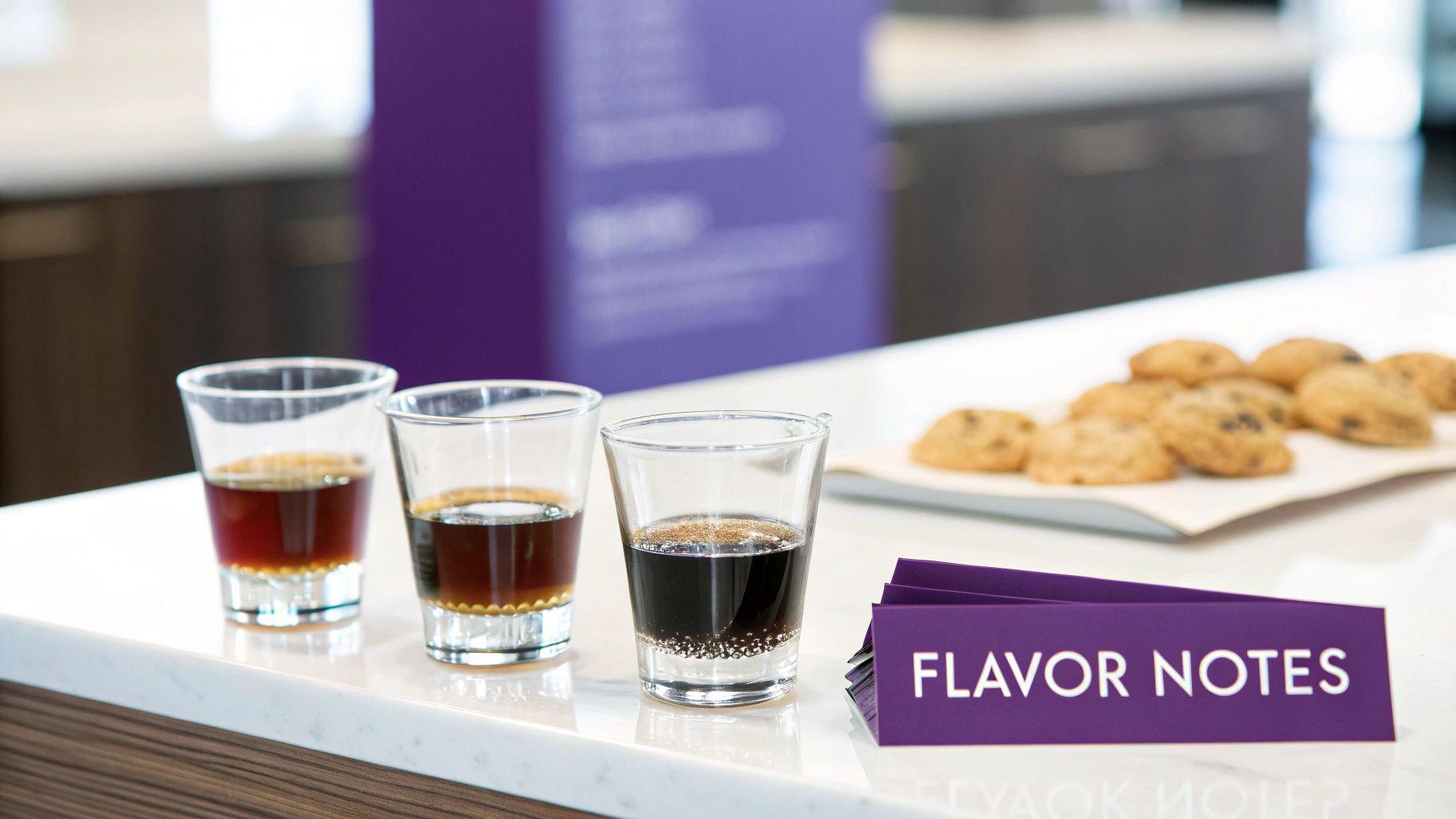
We've covered the how, but now it's time for the best part: the what. Let's dive into the incredible sensory experience of tasting cold drip coffee concentrate. This goes way beyond just calling a coffee "strong" or "weak." It’s an exploration of the nuanced, delicate flavours that the slow, heat-free process brings to life, turning every single sip into a discovery.
Since cold drip brewing skips the heat, it completely sidesteps the chemical reactions that create those familiar bitter and acidic compounds. This gentle method acts like a spotlight, highlighting the subtle characteristics hidden deep inside the coffee bean. What you get is a concentrate with stunning clarity and a naturally sweet finish.
Unlocking a Spectrum of Tastes
When you taste a well-made cold drip, you're experiencing the purest expression of that coffee bean's origin. The terroir—the unique combination of soil, climate, and altitude where the coffee grew—has a huge say in what ends up in your cup.
Here are a few common flavour notes you might pick up on:
- Chocolatey and Nutty: Beans from places like Brazil or Guatemala often produce a concentrate loaded with notes of dark chocolate, toasted almond, and caramel. These profiles are deep, comforting, and unbelievably smooth.
- Fruity and Bright: African coffees, particularly those from Ethiopia or Kenya, are famous for their vibrant, fruity character. You might taste hints of blueberry, strawberry, or even a bright citrus zest that makes the coffee feel lively and refreshing.
- Floral and Delicate: Some of the most sought-after coffees, often from Central America, can yield beautifully delicate floral notes. Think hints of jasmine, rose, or honeysuckle that add an aromatic complexity you just don’t get from hot brews.
The low-acidity nature of cold drip doesn't just make the coffee smoother; it allows these subtle, volatile flavour compounds to shine without being overpowered by bitterness. It’s like listening to an orchestra where every instrument can be heard perfectly.
The Art of Flavour Pairing
Understanding these flavour profiles opens up a whole world of food pairings. Just like with a good wine, matching the notes in your coffee concentrate to your food can elevate both experiences. At East End Annie’s, we love finding that perfect match to make your belly smile.
Think about complementing or contrasting flavours. For instance, a rich, chocolatey concentrate from a Brazilian bean is the perfect partner for one of our freshly baked pastries. The buttery sweetness of the pastry plays beautifully with the coffee’s cocoa notes.
On the other hand, take a bright, fruity Ethiopian concentrate. Its lively acidity and berry-like notes would cut right through the richness of a creamy dessert or pair wonderfully with the citrus tang of our lemon tart. It’s all about creating balance and making a memorable taste experience. Learning more about how bean origin shapes flavour is a great next step, and you can get started by exploring our guide on the importance of locally roasted beans and their unique profiles.
Experimenting with different beans and pairings is one of the most rewarding parts of enjoying cold drip. Every new batch is an opportunity to discover a unique flavour journey, transforming your daily coffee from a routine into a genuine sensory adventure.
Got Questions About Cold Drip? We've Got Answers.
Even after you get the hang of the process, a few questions always seem to bubble up when you first dive into the world of cold drip coffee concentrate. It’s a pretty unique way to brew, so it's natural to be curious. Let's clear up some of the most common ones so you can brew with total confidence.
One of the biggest questions we hear is whether cold drip is "stronger" than regular coffee. The answer is a bit of a yes and a no, and it all comes down to what you mean by "strong"—flavour or caffeine.
Yes, it’s much stronger in flavour. That’s because it’s a concentrate, made to be diluted. But when it comes to caffeine, that’s a different story. The slow, cold extraction actually pulls out less caffeine per gram of coffee than a quick, hot brew does. The final kick in your cup depends entirely on how much concentrate you decide to use.
Choosing the Best Coffee and Gear
Another common question is about the best beans for this method. As we've touched on, light to medium roasts are absolutely fantastic. The gentle cold drip process is perfect for preserving and highlighting their bright, fruity, and floral notes. Dark roasts can work too, but you might find they produce a less complex, more one-dimensional flavour.
The best coffee for cold drip is always freshly ground. Pre-ground coffee loses its aromatic oils fast, leaving you with a flatter, less vibrant concentrate. Grinding just before you brew is the single best thing you can do for flavour.
People often ask if a special tower is an absolute must. While a dedicated cold drip tower gives you the most control and consistency, you can definitely get creative with a makeshift setup. A simple DIY version could be a container with a tiny hole poked in the lid, suspended over a pour-over dripper filled with your grounds.
This kind of improvised method won’t be as precise, especially with the drip rate, but it's a great way to get a taste of the results before you decide to invest in dedicated equipment.
- Is cold drip less acidic? Absolutely. The cold water extraction can result in a brew that is up to 67% less acidic than hot coffee. This makes it incredibly smooth and much easier on your stomach.
- How long does it last? Keep your cold drip concentrate in an airtight container in the fridge, and it will stay fresh and delicious for up to two weeks.
- Can you heat it up? You bet! Just dilute the concentrate with hot water instead of cold. You’ll get a beautifully smooth cup of hot coffee in an instant.
Ready to explore the world of premium, locally roasted coffee perfect for your next brew? Visit East End Annie's online to browse our curated selection of beans and find your next favourite. https://eastendannies.ca