

Your Guide to Cold Brew Coffee Concentrate
Why Cold Brew Concentrate Is Taking Over
If you’ve noticed that chilled coffee seems to be everywhere lately, you’re definitely onto something. What used to be a simple seasonal treat has become a daily ritual for millions. But this isn't just about pouring yesterday's hot coffee over ice; it’s a full-blown movement, and it’s being led by a specific method that delivers better flavour and serious convenience: cold brew.
More specifically, cold brew coffee concentrate is the secret hero behind this trend. It’s what your favourite cafes—and a growing number of savvy home baristas—are using to make incredible chilled drinks, day after day, without the fuss.
The Rise of a Smoother, Bolder Coffee
So, what's driving this huge shift? It boils down to a perfect blend of amazing taste, grab-and-go convenience, and how our coffee habits are changing. Today’s coffee drinkers want that high-end cafe flavour without the harsh bitterness, and they want it ready in an instant. Cold brew concentrate nails it on every level.
- Exceptional Smoothness: The magic happens during the 12-24 hour cold water steep. This gentle process extracts far fewer of the acidic compounds that can make hot coffee taste sharp, resulting in a brew that’s incredibly smooth and easy on the stomach.
- Rich, Deep Flavour: By taking its time, the cold water pulls out all the sweet, chocolatey, and fruity notes hidden in the beans. It creates a complex flavour profile that a quick, hot brew often leaves behind.
- Ultimate Convenience: This is the real game-changer. A batch of concentrate in the fridge means your perfect iced coffee is literally seconds away. Just add water or milk, and you’re good to go.
The numbers don't lie. A 2025 report showed that 21% of cold coffee drinkers had a cold brew in the last week, a figure that jumps even higher for younger crowds. At major chains like Starbucks, cold drinks now make up around 75% of all beverage sales—a massive leap from just 37% a decade ago. You can find more insights on this trend from the National Coffee Association.
Think of cold brew concentrate as your flavour foundation. It’s a powerful, versatile base that puts you in the driver's seat, ready for anything from a simple iced coffee to a sophisticated cocktail.
For anyone new to this, making or buying your first batch of concentrate feels like unlocking a new level in your coffee journey. It’s about more than just a cold drink; it’s about having a better, more flexible coffee experience at your fingertips. Using locally roasted coffee beans will take your homemade concentrate even further, packing every cup with freshness and character. Let’s walk through everything you need to know.
So, What Exactly Is Cold Brew Concentrate?
Think of cold brew coffee concentrate as a secret weapon in your kitchen—a powerful flavour base, much like a rich stock a chef would use. It’s the super-potent, undiluted liquid you get after steeping coarse coffee grounds in cold water for a long time, usually somewhere between 12 to 24 hours. Critically, it’s never meant to be sipped straight.
This slow, patient steeping method completely changes the coffee’s chemistry. Hot water is aggressive; it rips flavours, oils, and acids out of the grounds in minutes. Cold water, on the other hand, is a gentle persuader. It slowly coaxes out the smooth, sweet, and chocolatey notes while leaving most of the bitter, acidic compounds behind.
The result? A brew that’s incredibly smooth and naturally sweet, with up to 67% less acidity than its hot-brewed cousin. This makes it a fantastic choice for anyone with a sensitive stomach or those who just aren’t fans of the sharp bite that sometimes comes with hot coffee.
How Is Concentrate Different from Other Cold Coffees?
It’s easy to lump all chilled coffee drinks together, but the method behind each one creates a world of difference in taste and texture. Cold brew concentrate stands apart because of how it’s made and how it’s used. Grasping these distinctions is key to understanding why it has become so wildly popular.
This shift toward smoother, less acidic coffee isn't just a local trend; it's a massive market movement. North America now holds the largest global market share for cold brew, hitting 35.76% in 2024. The demand is so strong that the U.S. cold brew market is projected to reach USD 4.88 billion by 2032, driven by everyone from major chains to your favourite neighbourhood cafe. You can explore more on the cold brew coffee market's impressive growth to see just how big this has become.
To make things crystal clear, let's break down how concentrate stacks up against other popular cold coffees.
Cold brew concentrate is the foundation, not the finished drink. Its purpose is to give you a strong, stable base that can be customized into dozens of different beverages, offering both quality and unmatched convenience.
Cold Coffee Comparison Chart
Each way of making cold coffee has its own unique process and delivers a distinct final product. The table below lays out the key characteristics of each, helping you pick the perfect brew for any mood or moment.
| Method | Brewing Process | Flavour Profile | Acidity | Best For |
|---|---|---|---|---|
| Cold Brew Concentrate | Coarse grounds steeped in cold water for 12-24 hours. | Rich, smooth, naturally sweet with chocolatey and fruity notes. | Very Low | Creating a variety of drinks (lattes, cocktails) and meal prepping coffee for the week. |
| Regular Cold Brew | Same as concentrate but brewed at a ready-to-drink strength. | Similar to concentrate but less intense; smooth and mellow. | Very Low | Pouring directly over ice for a quick, smooth coffee without needing to dilute. |
| Iced Coffee | Standard hot coffee (drip, pour-over) cooled down and poured over ice. | Can be sharp, acidic, and often tastes diluted as the ice melts. | High | A quick and simple way to get a cold coffee fix when you only have hot brew available. |
| Flash-Brewed Coffee | Hot coffee brewed directly over a precise amount of ice, chilling it instantly. | Bright, aromatic, and complex, preserving the coffee’s delicate notes. | Medium | Coffee aficionados who want to experience the nuanced flavours of single-origin beans in a cold format. |
Ultimately, cold brew coffee concentrate gives you the most freedom. It lets you be your own barista, putting you in complete control over the strength and flavour of your final drink.
How to Make Your Own Cold Brew Concentrate
Making your own café-quality cold brew concentrate at home is surprisingly simple and incredibly rewarding. Forget about needing fancy machinery or perfect timing; this process is all about patience. Once you master a few key elements—the right beans, the perfect grind, a simple ratio, and a slow steep—you'll unlock a consistently smooth and powerful coffee base that's ready whenever you are.
This hands-on guide will walk you through the four essential stages of making cold brew concentrate. We’ll cover everything from picking your coffee to the final filtering, with a few pro tips along the way to make sure your first batch is a home run.
Step 1: Choose Your Coffee Beans
The first step is also the most exciting: picking your coffee. While you could technically use any bean, your choice will dramatically shape the final flavour profile. The slow, cold extraction process is very forgiving and does a fantastic job of highlighting the inherent sweetness in coffee beans.
Here’s what to consider:
- Medium to Dark Roasts: These are popular for a reason. They deliver that classic, rich cold brew flavour with deep notes of chocolate, caramel, and nuts. The roasting process mellows out acidity, which is only enhanced by the cold steeping.
- Light Roasts: If you prefer a brighter, more nuanced cup, a light roast is an excellent choice. This method will draw out its delicate fruity and floral notes, creating a more complex and almost tea-like concentrate.
No matter which roast you choose, always start with whole beans and grind them right before you brew. Freshness is everything when it comes to unlocking the best possible flavour.
Step 2: Get the Grind and Ratio Right
This is where the magic really begins. Getting the grind size and coffee-to-water ratio correct is non-negotiable for creating a balanced concentrate that isn't bitter or weak.
For the best results, you absolutely need a coarse grind. Think of the texture of coarse sea salt or breadcrumbs. A fine grind, like you’d use for espresso, will over-extract during the long steep, leaving you with a harsh, bitter flavour and a cloudy, silty concentrate. A coarse grind lets the water circulate freely, gently coaxing out flavour without pulling out any of the unwanted stuff.
The gold standard for cold brew coffee concentrate is a 1:4 ratio by weight. This means for every one part coffee, you’ll use four parts water. For example, if you use 250 grams of coffee, you will need 1000 grams (1 litre) of water.
This strong ratio is what makes it a concentrate. It’s designed to be diluted later, giving you total control over the strength of your final drink. While the 1:4 ratio is a fantastic starting point, don't be afraid to tweak it slightly in future batches to perfectly match your taste.
Step 3: Steep Your Coffee Slowly
Once your coffee is ground and measured, it’s time for the easiest—yet longest—part of the process: steeping. This is where patience really pays off.
Combine your coarse coffee grounds and filtered water in a large jar, pitcher, or a dedicated cold brew maker. It's a good idea to use filtered water if you can, as the minerals and impurities in tap water can interfere with the flavour extraction.
Give the mixture a gentle stir to make sure all the grounds are fully saturated. You want every last particle to be in contact with the water. Once it's mixed, cover the container and let it steep.
- Steep Time: Let the coffee steep for 18 to 24 hours at room temperature.
- Location: Just leave it on your kitchen counter; there's no need to pop it in the fridge while it’s brewing.
Steeping for less than 12 hours can leave you with a weak, sour concentrate, while going over 24 hours risks over-extraction and bitterness. That 18–24 hour window is the sweet spot for a rich and balanced flavour.
Step 4: Strain and Store Your Concentrate
After the long wait, your cold brew concentrate is almost ready. The final step is to separate the liquid gold from the coffee grounds, a process that requires a little care to get a clean, grit-free finish.
This infographic shows the distinct processes for hot brew, traditional cold brew, and the potent concentrate we are making.
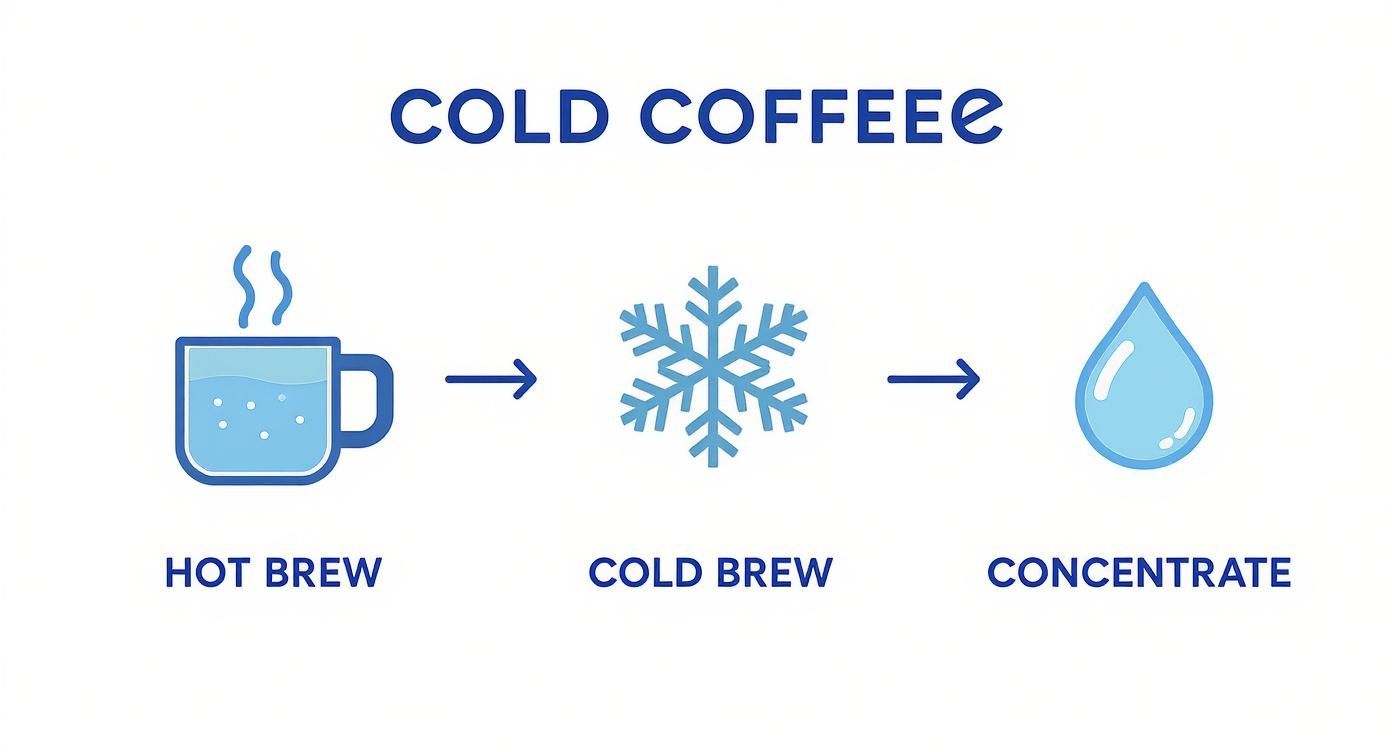
As the visual highlights, the concentrate's slow, cold process results in a fundamentally different and more potent base.
There are a few effective ways to strain your brew:
- French Press: If you brewed in a French press, just press the plunger down slowly and evenly. Pour the concentrate into a separate container for storage.
- Fine-Mesh Sieve and Cheesecloth: Place a fine-mesh sieve lined with a few layers of cheesecloth over a large bowl or pitcher. Slowly pour the coffee mixture through it.
- Coffee Filter: For an even cleaner result, you can use a standard paper coffee filter placed in a funnel or pour-over dripper. This method takes longer but removes even the finest sediment.
Once it's strained, transfer your finished cold brew coffee concentrate into an airtight container, like a mason jar or a bottle with a tight-fitting lid. Store it in the refrigerator, where it will stay fresh and delicious for up to two weeks. For a deeper dive into another fascinating slow-brew method, check out our guide on cold drip coffee concentrate, which offers a different take on creating a smooth, powerful brew.
Using Your Concentrate to Craft Perfect Drinks
You’ve patiently steeped and filtered your way to a perfect batch of cold brew coffee concentrate. Now, the real fun begins. With that potent, smooth liquid sitting in your fridge, you're not just ready to make coffee—you're equipped to run your own personal café, turning one simple base into a whole menu of incredible drinks.
This is where the magic of concentrate truly shines. Because it’s so rich, you are in complete control. You get to decide exactly how bold or mellow you want your drink to be, tailoring each glass to your specific mood or the time of day. Let's start with the most important step: mastering dilution.

Mastering the Art of Dilution
Because your concentrate is so powerful, you'll almost never drink it straight. The secret to a great cold brew beverage is finding the right balance of concentrate to liquid—whether that's water, milk, or something else entirely. This isn't about rigid rules; it's about finding what works for you. A great starting point is a 1:2 ratio, meaning one part concentrate to two parts liquid.
Think of it like this:
If you want a strong, bold coffee to kick off your morning, a 1:1 or 1:2 ratio is perfect. For a lighter, more refreshing afternoon sipper, you might prefer a 1:3 or even 1:4 ratio. The power is entirely in your hands.
This flexibility is what makes homemade concentrate so rewarding. You can easily tweak the strength without having to brew a whole new pot.
Ready to dial in your perfect strength? This simple table breaks down common ratios and what you can expect from each.
| Desired Drink | Concentrate to Liquid Ratio | Resulting Flavour |
|---|---|---|
| Strong Iced Coffee | 1:1 or 1:1.5 | Bold, intense, and coffee-forward |
| Classic Cold Brew | 1:2 | Smooth, balanced, and refreshing |
| Creamy Latte | 1:2 or 1:2.5 | Rich and milky with a solid coffee base |
| Light & Mellow Sip | 1:3 or 1:4 | Light, easy-drinking, and less intense |
Use these as a guide, but don't be afraid to adjust until you find the perfect balance for your palate.
Simple Recipes to Get You Started
Once you're comfortable with dilution, you can start crafting specific drinks. The concentrate you've made is a fantastic base for countless recipes, from timeless classics to more inventive creations. Here are three simple but delicious recipes to show you just how adaptable your homemade cold brew concentrate can be.
Classic Iced Coffee
This is the purest expression of your cold brew concentrate and the easiest way to enjoy its smooth, rich flavour. It’s a coffee-forward drink that’s crisp, refreshing, and incredibly simple to pull together.
- Fill a tall glass to the brim with ice.
- Pour in one part cold brew concentrate.
- Top it off with two parts cold, filtered water.
- Stir gently and enjoy.
For a slightly sweeter version, add a splash of simple syrup or your favourite sweetener. This is your go-to for a quick, no-fuss caffeine fix.
Creamy Cold Brew Latte
For those who prefer a richer, creamier coffee experience, a cold brew latte is the perfect choice. The natural low acidity of the concentrate pairs beautifully with both dairy and plant-based milks, creating a drink that’s silky smooth. Oat and coconut milk are particularly great options here.
- Fill your glass with ice.
- Pour in one part cold brew concentrate.
- Top with two parts of your milk of choice.
- For a shaken latte, combine the concentrate, milk, and a sweetener in a shaker with ice. Shake vigorously for 15-20 seconds until frothy, then pour.
This method creates a beautiful foam and a perfectly blended texture, rivalling anything you’d get from a high-end coffee shop.
Sophisticated Coffee Cocktail
Ready to take your concentrate to the next level? Its smooth, deep flavour makes it an amazing ingredient for cocktails. It pairs wonderfully with a wide range of spirits, from whisky and rum to vodka. This simple recipe creates a balanced and impressive drink, perfect for winding down.
-
Ingredients:
- 1.5 oz Whisky or Dark Rum
- 1 oz Cold Brew Coffee Concentrate
- 0.5 oz Maple Syrup or Coffee Liqueur
- A dash of orange bitters (optional)
-
Instructions:
- Fill a cocktail shaker with ice.
- Add the whisky (or rum), cold brew concentrate, maple syrup, and bitters.
- Shake well for about 20 seconds, until the shaker is chilled.
- Strain into a chilled rocks glass with a large ice cube.
- Garnish with an orange peel twist.
These three recipes are just the beginning. Your jar of cold brew coffee concentrate is a blank canvas, inviting you to experiment with different flavours, milks, and spirits. Don't be afraid to try new combinations and discover your own signature drink.
How To Store And Buy Cold Brew Concentrate
So, you've either perfected your own homemade batch or grabbed a bottle from the shop. Now what? Knowing how to store your cold brew coffee concentrate properly is just as important as knowing how to brew it. Get it right, and you'll preserve that smooth, rich flavour you love. Get it wrong, and it's a fast track to disappointment.
Think of your concentrate like fresh-squeezed juice. The moment it hits the air, oxidation starts breaking down those delicate flavour compounds. The good news is, protecting it is easy.
Just pour your freshly strained concentrate into a clean, airtight container as soon as you're done brewing. A mason jar with a good seal or a glass bottle with a stopper works perfectly. Tucked away in the fridge like this, your concentrate will stay fresh and delicious for up to two weeks.
How To Be A Savvy Concentrate Shopper
For those days when brewing your own just isn't in the cards, store-bought concentrate is a lifesaver. But not all bottles are created equal. A little label-reading savvy can mean the difference between a fantastic cup of coffee and a lacklustre one.
When you're scanning the shelves, here's what to look for:
- Bean Origin and Roast Level: Good labels will tell you where the beans are from (like Colombia or Ethiopia) and the roast level. This gives you a huge clue about the flavour profile. A medium roast from Central America, for example, will likely deliver those classic, chocolatey notes that make for a perfect cold brew.
- Brew Date: Freshness is everything. A "brewed on" date tells you you're getting a product that hasn't been gathering dust. Flavour degrades over time, so the fresher, the better.
- Ingredients List: The best concentrates keep it simple: just coffee and water. Be wary of products loaded with added sugars, preservatives, or artificial flavours. Those are often there to mask lower-quality coffee.
If you're making your own, starting with top-notch ingredients is the best way to guarantee a great result. We recommend checking out a curated selection of locally roasted coffee beans to ensure you're getting peak freshness and flavour.
The Rise Of Ready-To-Drink Options
Beyond just concentrate, the ready-to-drink (RTD) coffee scene has exploded. You can find it everywhere now—in cans, bottles, and even big multi-serve boxes. This market is now valued at a whopping $37.64 billion globally, which just shows how much we all love a great coffee on the go. Brands are constantly innovating, too, rolling out everything from protein-infused cold brews to creamy oat milk lattes. It's a convenient world out there for coffee lovers.
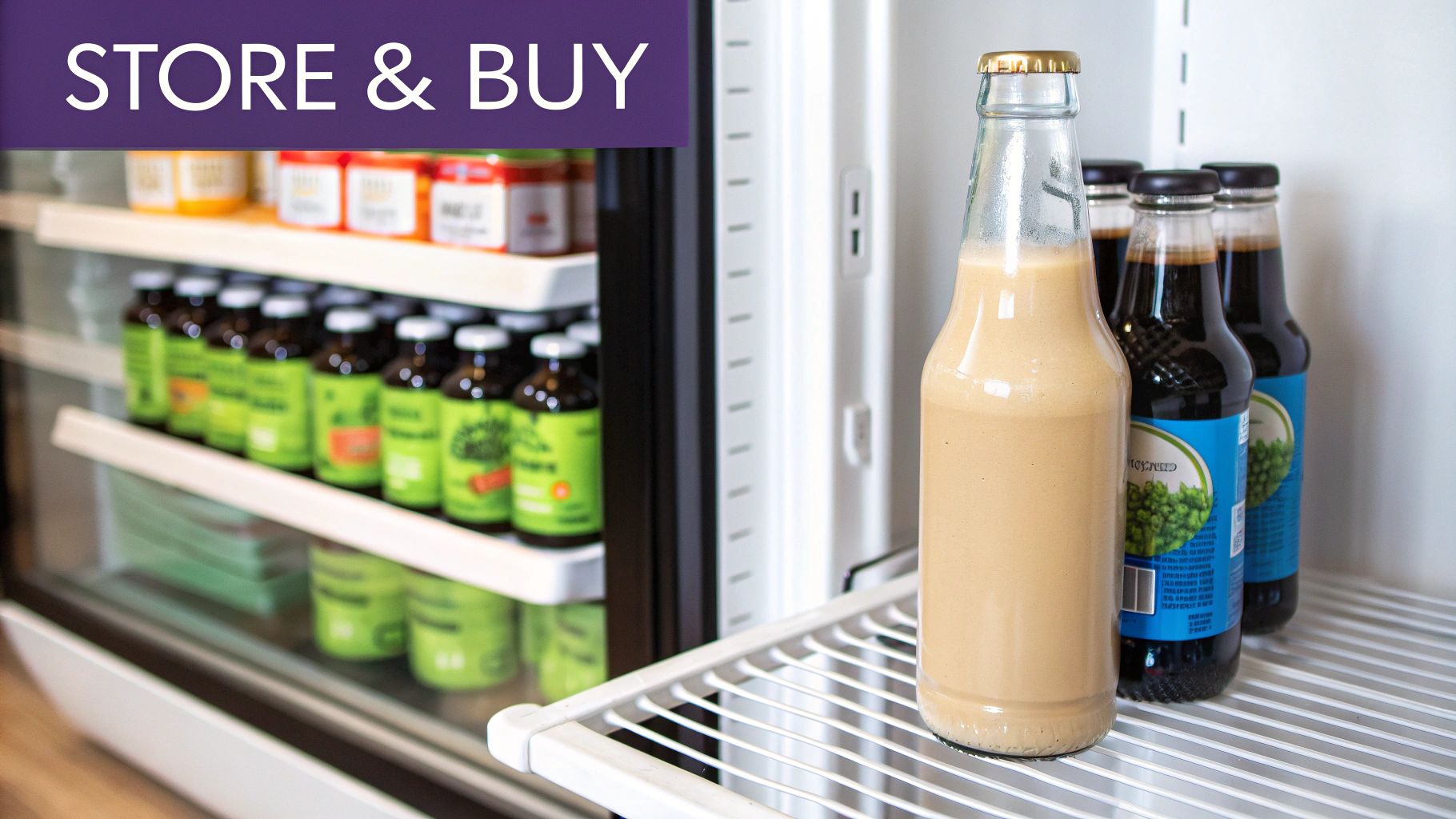
When choosing a pre-made cold brew, treat it like buying fresh produce. The fewer ingredients and the clearer the information about its origin and brew date, the better the final product is likely to be.
Whether you decide to brew your own or buy a bottle off the shelf, you're now armed with the know-how to make sure every glass of cold brew you pour is smooth, flavourful, and exactly what you were hoping for.
Got Questions About Cold Brew Concentrate? We’ve Got Answers.
Even with a process as simple as cold brew, a few questions always come up when you're getting the hang of it. Making and using cold brew coffee concentrate is no different. Think of this section as your personal troubleshooting guide, built to solve those common hiccups and clear up any lingering confusion.
We'll tackle everything from fixing a brew that went sideways to the finer points of flavour and caffeine. Let’s dive into the most frequent questions so you can feel totally confident on your cold brew journey.
Why Does My Concentrate Taste Bitter or Sour?
This is, without a doubt, the number one question we hear, and the answer almost always comes down to one thing: extraction. The final taste of your coffee is a direct result of how much flavour the water has managed to pull from the grounds.
- A bitter taste is the classic sign of over-extraction. This usually happens when you let the coffee steep for way too long (think well over 24 hours) or if your grind size is too fine, which just exposes too much surface area to the water.
- A sour or weak taste means you’ve got under-extraction. This is the opposite problem, typically caused by not steeping long enough (less than 12 hours) or using a grind that’s way too coarse.
For that perfectly balanced, smooth flavour, you want to hit the sweet spot: a coarse grind steeped for 18 to 24 hours at room temperature. This window gives the water just enough time to pull out all the good stuff without grabbing those bitter compounds.
Think of it like toasting bread. A little time gives you a perfect golden-brown slice (a balanced brew). Too much time, and you get a burnt, bitter piece (over-extraction). Not enough, and it’s just warm bread (under-extraction).
Can I Use Any Type of Coffee Bean?
You sure can. You can use any coffee bean you already enjoy, but your choice will make a huge difference in the final flavour of your concentrate. The slow, gentle steeping process is incredibly forgiving and does a fantastic job of highlighting the natural sweetness of the beans.
Medium to dark roasts are a popular choice for a reason—they consistently produce that rich, classic cold brew taste with deep notes of chocolate, nuts, and caramel. The roasting process itself lowers the acidity, a quality the cold brew method brings out even more.
Light roasts, on the other hand, create a wonderfully different experience. They give you a more delicate, fruity, and floral concentrate that can almost be tea-like. The most important factor isn't the origin or the roast, but the grind. It must be coarse to stop your filter from clogging and, more importantly, to avoid that harsh bitterness from over-extraction.
Is Cold Brew Concentrate Stronger Than Espresso?
This one’s a bit tricky because it depends on whether we're talking about the straight-up concentrate or the final drink in your glass.
In its pure, undiluted form, cold brew coffee concentrate can have a much higher caffeine concentration per ounce than a shot of espresso. It's some seriously potent stuff.
But here’s the thing: you never drink it straight. Once you dilute the concentrate to make your drink (say, at a common 1:2 ratio with water or milk), the caffeine level in your finished cup becomes much more comparable to a standard coffee. The final beverage will often have a caffeine content similar to, or maybe slightly less than, a drink made with a double shot of espresso. The real difference is that your cold brew version will be miles smoother and way less acidic.
Can I Make Hot Coffee with My Concentrate?
Absolutely! Using your concentrate to make hot coffee is a fantastic trick for getting a uniquely smooth, low-acid cup. It’s a great move for anyone who loves the taste of hot coffee but finds it a bit harsh on their stomach.
The secret is how you heat it. Whatever you do, don't microwave or boil the concentrate itself. Blasting it with direct, intense heat can bring back some of the bitter flavours you worked so hard to avoid.
Instead, just follow this simple process for the best results:
- Boil water using a kettle.
- Pour your desired amount of cold brew concentrate into your favourite mug.
- Top it off with the hot water, diluting it to your preferred strength (a 1:2 or 1:3 ratio is a great place to start).
This method gently warms the whole drink without "cooking" the concentrate, keeping that signature smooth and sweet flavour profile intact.
Ready to skip the brewing and get straight to the delicious results? The team at East End Annie's has perfected the art of cold brew. Stop by our café to try a glass made with our premium, locally roasted beans, or grab a bottle to enjoy at home.